The Temasek Wreck Yuan Blue and White
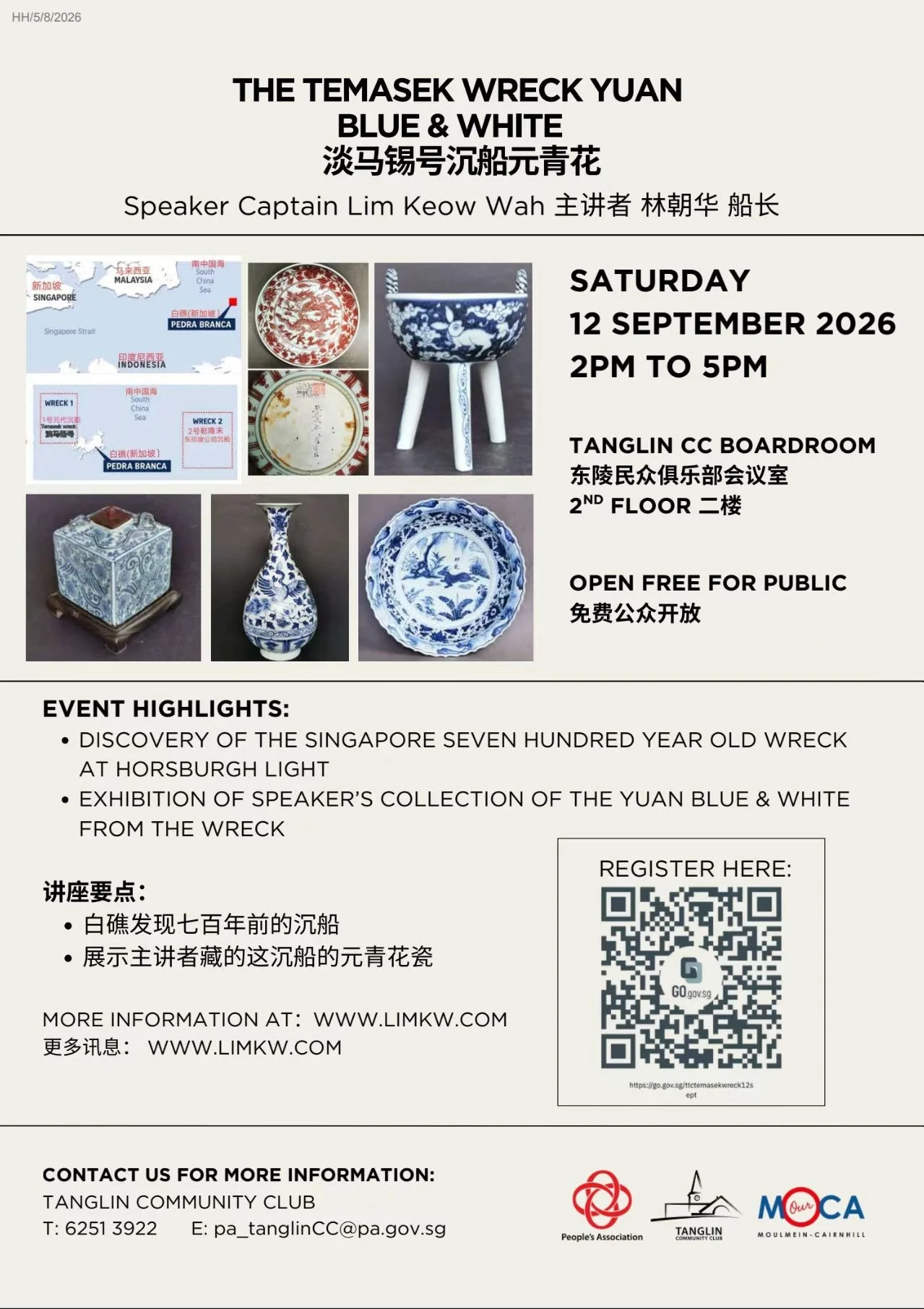
我的讲座 “淡马锡号沉船元青花”请扫描或上网登记https:web:https: //form.gov.sg/6a7187f5c71b6c2c2e7f5459. 然后通知我你已确定登记亲身或Zoom 线上参加。外国人或不会上网的了联络我帮忙登记 联络 +6588091161 limkeowwah@gmail.com
My Talk: "THE TEMASEK WRECK YUAN BLUE & WHITE" Please register by scanning or go to web:https: //form.gov.sg/6a7187f5c71b6c2c2e7f5459。 Then inform me your confirmed registration in person or Zoom participation. Foreigner or you do not how to register on line please seek my help. contact: +6588091161 limkeowwah@gmail.com
Singapore
Singapore, formerly known as Temasek, was founded in 1299 and conquered in 1398, and the Royal Palace was built on Fort Canning Hill on the right side of the Singapore River, commonly known as the Royal Forbidden Hill. Wang Dayuan, the author of The Legend of Daoyi Zhilue" 《岛夷志略》 visited Temasek in 1330. Describe the two hills of Tamasek, intersecting like a dragon's tooth, with a waterway in between. There is little barren rice in the fields. The weather is hot, and there is a lot of rain in April and May. With tradition to plunder. The former chief dug into the ground and got the jade crown. With sighting new moon as the at the beginning of the month, the chief wore a crown and a cloak to receive congratulations, and now it is also passing o from one to another. Men and women live in it as well as Chinese. Tie the conical bun, short cloth shirt, tie with green cloth. The local produce of low-grade Jiang Zhenxiang (降真香木Laka incense wood) and square shape tin ingot. The goods of trade are made of copper ingot, satin, printed cloth, Chu porcelain(处甆器), iron wok, etc. There is no fine product from this land, and there is no foreign goods in the tribute. It is mentioned in many places in the "Daoyi Zhilue" that the porcelain sold to foreign countries is called Chuzhou porcelain (处州瓷) Chu porcelain"(处瓷), and "Qingchu porcelain (青处瓷Chu Celadon) in the Ming Dynasty it was governed by Chuzhou Fu(处州府), which is called Longquan porcelain in the Ming Dynasty. Jiang Jianyin's earliest date on the first firing of Yuan blue-and-white can be referred to: 1. A blue and white cloud dragon pattern jar was found in the Jintan cellar in Jiangsu, and a silver plate engraved with Arabic Hijri in January 714 (equivalent to 1336 AD) was unearthed in the same cellar; 2. Jiangxi Provincial Museum collection "Zhi Yuan Wuyin"( 至元戊寅1338) blue and white inscription four spirit pagoda ash urn with lid; 3. Xian Qujiang (曲江)excavated Zhang Hongyi (张弘毅) to the fifth year of the ZhiYuan( 至元五年) Yuan Dynasty (1339) tomb unearthed a blue and white wine cup serving ladle, 4, Yuan blue and white when fired in the middle and late Yuan Dynasty "Xin An shipwreck out of the water with ink written on wooden slip ZhiZhi"至治三年六月一日”(1323年)on June 1, 1323, the third year of Zhizhi, and the shipwreck did not see the Yuan blue and white unearthed, so it is inferred that the first firing age of the Yuan blue and white will not be earlier than 1323, and the Yuan blue and white appeared after the third year of the Zhizhi Yuan Dynasty (1323), before 1336, which seems to be more reliable". It will take some time from the beginning of the firing year to the maturity or export period. It is also possible that when Wang Dayuan visited Temasek in 1330 and 1337, he did not mention the Yuan blue and white porcelain, but only the Longquan porcelain.
1. Fort Canning Hill 1984 by John. Dr. John N. Miksic conducted an excavation halfway up Fort Canning Hill (4) Fig.1, a considerable number of fragments of Yuan, Longquan, Qingbai porcelain and blue and white porcelain have been excavated from the soil layer of the Yuan Dynasty through scientific archaeology. Among them, the fragment of the compass bowl Fig. 2 has not been found elsewhere at the same time. The blue and white porcelain bowl fired by Jingdezhen kiln in the Yuan Dynasty has been cracked into many pieces when it was unearthed, and there are six pieces of the bottom of the bowl (ring foot) and the bowl body. The heart of the ring foot bowl is painted in blue colour (commonly known as blue and white, cobalt oxide mineral pigment) two Chinese characters, the first word is "筭" ("calculation"), the other word is incomplete, only the upper half of the "亼", "亼" under the stroke of the possible words are: "She", "She", "Yu", "Quan", "He" and "life",(舍“,”佘“,”余“,“全”,“合”和 “命) the author guesses, may be the word "fortune telling"(算命)? . If the second word below is "life"(命), the author believes that this bowl may not only be used for navigation, but also for exploring feng shui. After the two small pieces of the bowl body are pieced together and restored, it clearly shows the six characters of "Zi" (due north), "Cou"(丑), "Chen"(辰),” Yi"(巳), "Wu" (午) and "Wei"(未) and there is a circle of similar graduation scales above the text. These six porcelain shards, the ring foot biscuit is thick and heavy, and the biscuit body is glazed with egg white glaze(卵白釉)with crackle which may be due to the phenomenon of crackle decorating slip before applying the glaze of Yuan blue and white. The colour of blue and white cobalt material is dark grey (may be the colour more relate to the end of the Yuan). If the whole porcelain bowl is restored, its complete shape should be similar to the typical egg-white glaze or blue and white flare rim bowl fired in the Jingdezhen kiln of the Yuan Dynasty. The Chinese nautical compass generally lists 24 directions, but this compass only lists the directions of 12 characters (30 degrees apart between two adjacent directions), and it is possible that the bowl is small and cannot accommodate all the 24 characters.

Fig.1 Yuan Dynasty soil layers in an archaeological excavation pit halfway up
Fort Canning Hill, Singapore, in 1984

Fig. 2 Fragments of blue-and-white compass bowls unearthed at Fort Canning Hill,Singapore, with the word "筭" "calculate" Collection of the National University Museum
2. Victoria Concert Hall
In 2010, the archaeological excavation in the open space of Old Parliament House Lane, next to the Victoria Concert Hall, Fig. 3, the important unearthed cultural relic is a Yuan Dynasty Yuhuchun vase with the upper half of the neck and mouth lost Fig. 4. The glaze is close to egg white. The painting is a grape vine leaf and fruit scroll, a band of grass pattern on the short ring foot, and the painting is delicate and the Persian smalt colour is bright blue.

Fig. 3 Archaeological excavation on the vacant lot of the old Parliament House Lane near the Victoria Concert Hall, Singapore
Fig.4 A Yuhuchun vase of a Yuan Dynasty grape vine scroll unearthed at the Victoria Concert Hall in Singapore
3. Empress Place
In 2015, the largest archaeological excavation ever carried out by the National Heritage Board of Singapore at Empress Place on the banks of the Singapore River, unearthed 2.5 tons of cultural relics, including the Yuan Dynasty: shard of the Lin(water caltrop 菱花)flora rim plate, the Longquan remnant tripod incense burner, the Yinqing (影青)small lid box with sculpture figures and blue and white fragments Fig.5 with chrysanthemums, pointed and curved edges lotus petals and square shoulder lotus petal bowls.

Fig.5 Fragments of Yuan blue-and-white bowls excavated from Empress Place
on the banks of the Singapore River
4. St. Andrew's Cathedral
In 2004, an archaeological excavation in the open space inside the fence of St. Andrew's Cathedral Fig.6 revealed a ton of excavated artifacts, including a small 14th-century Zhangzhou pottery jarlet and a piece Fig. 7 of the fragment of the Yuan blue-and-white bowl, the inner mouth of the bowl has a spiral scroll pattern, and the inner bottom is a bunch of lotus pattern.
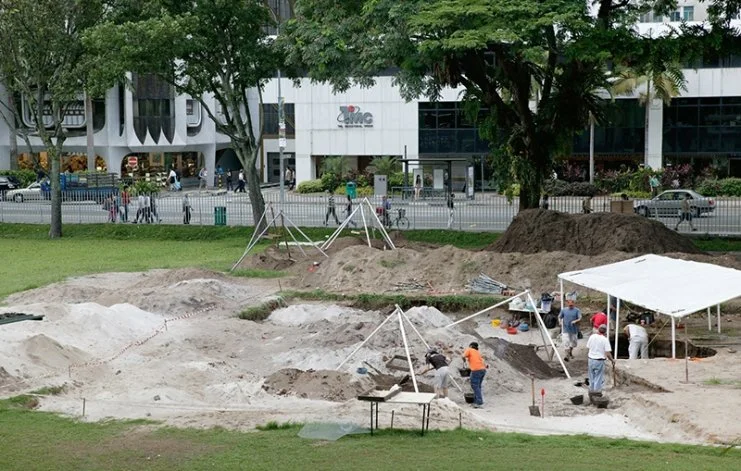
Fig.6 Archaeological excavation in the open space inside the fence of St. Andrew's Church, Singapore
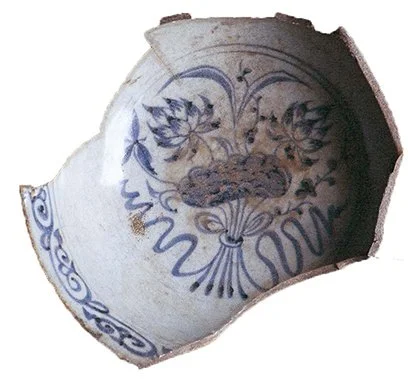
Fig.7 Fragments of a blue-and-white bowl unearthed at St. Andrew's Church, Singapore
5. The Temasek Wreck of Pedra Branca Reef
In 2015, during the salvage of a modern flat-bottomed steel barge stranded near the Pedra Branca Lighthouse at the eastern entrance to the Singapore Strait, a Yuan Dynasty Chinese shipwreck and a Qianlong-era British East India Company shipwreck were found nearby. This time we are going to talk about is the Yuan Dynasty shipwreck near the Horsburgh (Pedra Branca/White Rock Reef/Batu Puteh)Lighthouse Fig 8. The salvage work was carried out from 2016 to 2019 under the auspices of the National Heritage Board of Singapore and the Yusof Ishak Institute of Southeast Asian Studies, Michael Flecker presided over the salvage and made the initial archaeological report in 2022 (5). According to report, the sailing vessel may have sailed south from China during the northeast monsoon between November and March, and when it sailed westward into the eastern entrance of the Singapore Strait, it deviated for some reason from the deep-water channel to the south shallow waters, and may have hit a reef about 60 metres northwest of the lighthouse of 2 metres deep. The wooden ship, which had completely disintegrated at the wreck site, could not find the wooden structure of the hull, and was judged to be a Chinese sailing junk based on a rectangular inkstone that may have been the personal belongings of the crew, and that the porcelain and artifacts were scattered in shallow water of 2 to 8 meters in an area of about 80 meters long and about 40 meters wide Fig. 9.
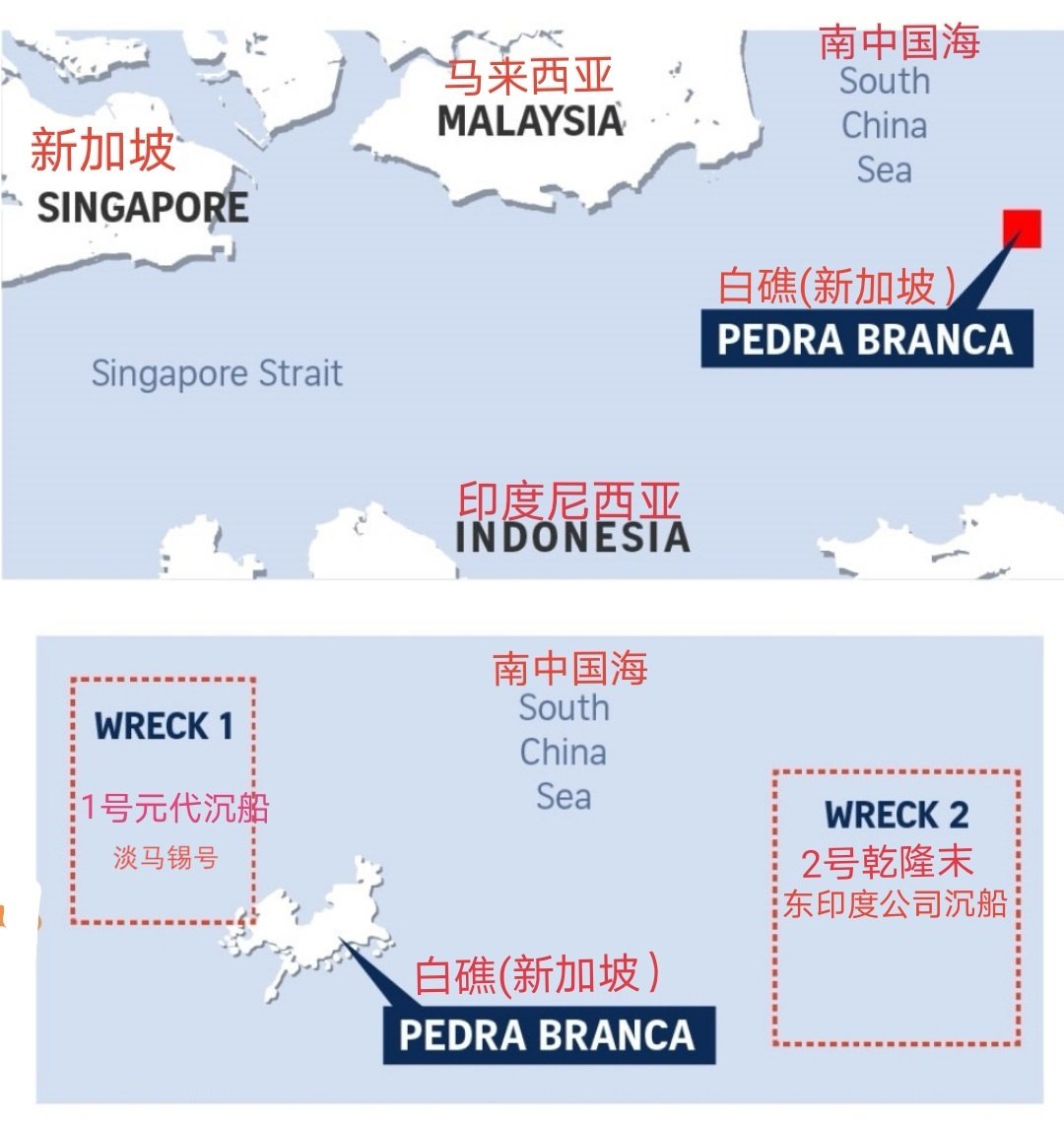
Fig 8 Yuan Dynasty shipwreck No. 1 near the Pedra Branca Lighthouse
at the eastern entrance to the Singapore Strait

Fig. 9 Ceramic scatter of the Temasek shipwreck near the Pedra Branca lighthouse, Singapore, E15 spot where the junk hit the reef.
A total of 4.4 tons of porcelain were salvaged, including Longquan, Qingbai, Shufu, Dehua, Yuan Blue and white and Zhangzhou kiln pottery jars, and five fragments on display at the Asian Civilization Museum Fig. 10: a bunch of lotus bowl of mandarin ducks inside, gardenia, lingzhi and passion flower scroll bowl, four vajras on the inner bottom of stem cup, a large bowl of peony scroll, the largest piece is a fragment of a large jar of painted peony scroll, and the inner wall is also clearly visible of thick parallel lines may be scraped with a bamboo brush. These fragments share common features, with skilful and graceful painting, the transparent egg-white glaze and the vivid emerald blue colour of Su Ma Liqing cobalt (smalt from Persia) that seems to be less affected by long-term erosion of the sea. It is said that the fragments of Yuan blue and white that came out of the water of this ship are the largest number of archaeological records ever recorded. Since there is no Yuan blue and white plate favoured by the Middle East and India, and most of the types of ceramics unearthed in the water are similar to those unearthed in the Yuan Dynasty on the main island of Temasek in Singapore, this report deduces that the port of destination of this ship is Temasek 60 km further west, and the Yuan Dynasty shipwreck is named Temasek. It is estimated that the place where the ship first hit the reef was near the detection square, E15, which is a special focus of many poachers, there were several stacks of Longquan bowls solidified on the reef by rust and coral, and several blue and white bowls that were almost intact, and there were signs of severe damage by the raiders.
The above is based on the preliminary report of Temasek Wreck's 2022 salvage study, and the overall salvage has not yet been fully sorted out and completed, and there should be a more complete report and summary of the research and findings later.
It is a pity that the whole ship salvaged the only fully intact Yuan blue & white round-bellied long-necked vase with a high ring foot, neck has a raise round dish, the report indicates that this device is a Persian hookah bottle, but the author thinks that it should be a hand cleanse vase Fig. 11, similar shard has also been unearthed at the kiln site of the end of the Yuan Dynasty in Luomaqiao, Jingdezhen, Fig. 12 . There are a total of eight layers of paintings, from top to bottom, neck: brocade pattern, banana leaves, copper coin with hole, flame lotus petals, spiral scroll pattern, shoulder: gardenia scroll, body: passion flower scroll, upward lotus petals. Foot: pointed and curve edges lotus petals.

Fig.10 Temasek Wreck tuan 端砚inkstone, Longquan Celadon and Yuan
blue & white Fragments from the collection of the Asian Civilisations Museum

Fig. 11 The only intact blue and white hand cleanse vase of the Horsburgh reef
Temasek Wreck, hight about 30 cm, collection by Asian Civilisations Museum
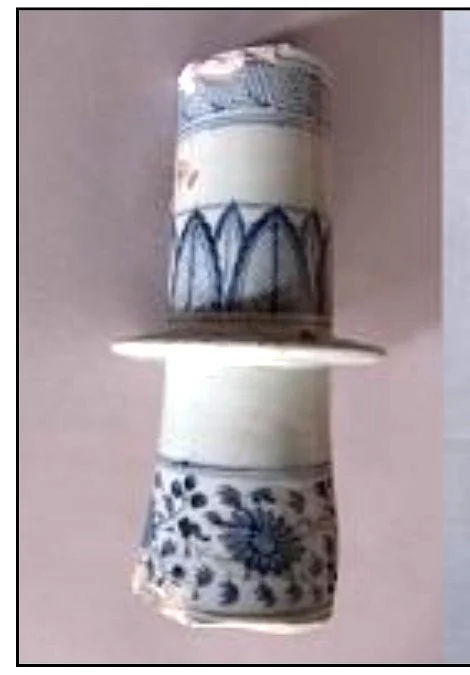
Fig. 12 Shard from the kiln site late Yuan Dynasty in Luomaqiao, Jingdezhen
It is unusual for the whole ship to salvage the only blue and white complete piece of the Yuan blue and white hand cleanse vase, in normal case a wreck contains thousands or tens of thousand pieces of ceramics. There may be two reasons for this: (1) The author believes that when the wooden ship hit the reef and was shipwrecked, the hull broke and several sections were washed away by the ebb tide of the turbulent flow at a speed of two knots, or the wooden structure and porcelain were washed away by the current after the wooden hull disintegrated hundreds of years later. (2) There are two references in the report to the traces of damage to the wreck by looters prior to archaeological salvage and the looting of the wreck, Fig. 13.
In 2000 AD, 15 years before the discovery of the wreck at Pedra Branca(Horsburgh reef), fishermen from Indonesia, who were closer to the reef, used rectangular fishing cages made of chicken wire mesh instead of fishing nets on small sampans to fish in the shallow waters of Pedra Branca, as shown in Fig. 14 and had to dive to secure the wire cages to the seabed at a depth of 2 to 8 meters to avoid being swept away by the turbulent currents. Fishermen were the first to discover the Yuan Dynasty shipwreck and Yuan blue & white and a large number of thefts. The author believes that the National Heritage Board of Singapore only found a blue and white complete vessel and the fishermen's pre-robbery and theft are the main reasons.

Fig. 13 Temasek Wreck Coralization of coral and rusted iron on Longquan plates at the seabed with signs of damage caused by the poachers

Fig. 14 Wire cage dive fishing commonly used by sampan fishermen in Indonesia and Singapore
Over the years, there have been a numbers of Yuan blue-&-white shipwreck pieces appeared in Singapore's antique market, some of which come from several waters in Indonesia, such as Natuna Islands, Palembang Musi River, Belitung, Java sea Tidung Island and Linga Island, but most of the sellers are reluctant to say the source of the water or really don't know the source, but the author feels that many of the artifacts seem to come from the surrounding areas not far from Singapore. June 16, 2021 Press release about the discovery and completion of the salvage of two Yuan and Qing dynasty shipwrecks in the waters of Pedra Branca Singapore. Prior to this announcement, author happened to learn through contacts that the seller possesses some underwater-excavated Yuan dynasty blue-and-white porcelain pieces, the earliest of which have been recovered from Batu Puteh (white reef in Malay) since 2000, which is the waters of Pedra Branca of Singapore, and was picked up by Indonesian fishermen diving in sampans with wire cages Fig. 15.
These two messages have resolved my puzzle for many years. Because these ship wreck Yuan blue and white are authentically proved by archaeological and non-archaeological means, their existence and accurate provenance. The most important shipwreck of the Yuan Dynasty appeared in the water of our country, which is also related to the maritime trade of Singapore's Temasek and the Maritime Silk Road 700 years ago.
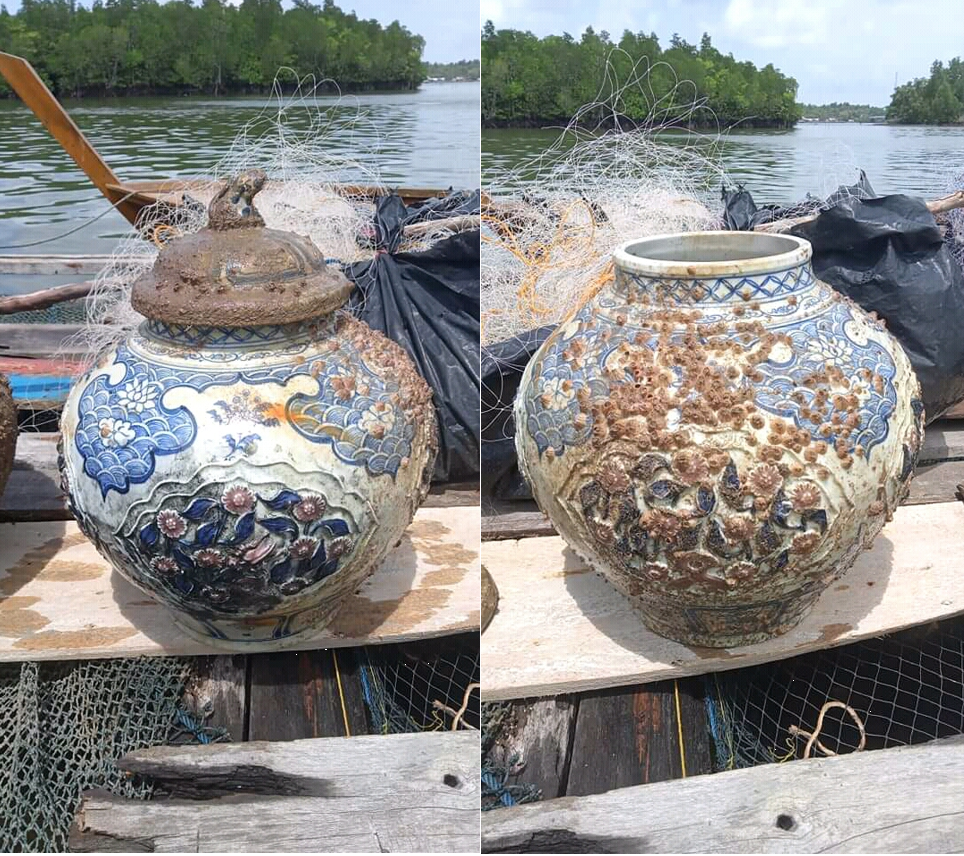
Fig. 15 A small Indonesian fishing boat at an unspecified island among the mangroves, carrying a large vase with a dog-shaped lid, decorated with sprigs of chrysanthemums applied inside the beads border of underglaze copper red on Yuan blue-and-white porcelain just surfaced from the water, featuring large ruyi(wood fungus) patterns.
The Source of Horsburg Temasek Wreck Yuan blue-and-White on the Market
A considerable number of Yuan blue-and-white porcelains from the Horsburgh light house reef Temasek shipwreck have appeared in the Singapore antiquities market. After long-term tracking, their origins have finally been discovered. Mr. Setiano, from Pulau Lingga, later moved his operations to Pulau Batam. He was originally engaged in maritime smuggling transport. As early as 2000, he learned that diving fishermen had discovered Yuan blue and white ware in the shallow reefs of Horsburgh Light House (Batu Puteh/Pedra Branca), and he organized the fishermen to continue salvaging many pieces of Yuan blue and white over the years. These were then resold to the market through several channels via brokers. Mr. Setiano passed away in 2021 due to the coronavirus.
Introduction and authentication of Horsburgh Light (Pedra Branca) Yuan blue-and-white
The author has long paid close attention to this category of porcelain. Very few people have any understanding of Yuan blue-and-white ware, let alone knowledge of the Yuan blue-and-white porcelain from the Temasek Wreck off Horsburgh Light Reef. This is especially true for the complete Yuan blue-and-white vessels from the Temasek Wreck that have remained outside the Asian Civilisations Museum and circulated among the public—there are quite a number of them, ranging from small and medium to large pieces. Many of these pieces differ from common museum collections of Yuan blue-and-white in terms of painting style, shape, applied decoration, slip coating on the body, function, use of Persian cobalt pigment, glaze, manufacturing techniques, and signs of aging from prolonged submersion in water. Some of these features have never been seen before.
As important cultural relics of our country, I feel it would be a disservice to them if they were left scattered and neglected among the public, like loose sand, without being properly identified or recognized as legitimate Yuan blue-and-white from the Temasek Wreck. I hope to use my limited personal capacity to bring together as many Temasek wreck porcelains that have remained in this country as possible, so that they do not remain fragmented and forgotten. Without systematic documentation and research, without rigorous verification of their provenance, and without collecting and comparing a substantial number of physical examples—whether hundreds of small, medium, and large vessels or thousands of shards—any attempt to authenticate Yuan blue-and-white will be insufficient and unconvincing.
Without conducting detailed, multi-faceted examinations and comparisons of every aspect of each vessel—inside and out, and across all parts of the body—it is impossible to confirm their authenticity and dating. Relying solely on visual observation with the naked eye cannot provide the same amount of information as using a hundredfold or higher optical or electronic microscope to enter the microscopic world, where one can obtain many hard-to-forge signs of age. Unless a piece is an obvious modern fake, some old objects that are not immediately "loud" and obvious cannot be judged at a glance. Sometimes it takes multiple sessions, or many hours, or even many days to find the conclusive traces and characteristics of an authentic old piece.
Those who have never handled these objects, or who have only a few pieces in their collection, or who rely solely on viewing museum collections, online images, or books, might rashly dismiss these as modern fakes—but that would be neither credible nor plausible. They underestimate the volume of Yuan dynasty porcelain exported via the Maritime Silk Road to Southeast Asia or the Middle East. Just consider the 180,000 artifacts recovered from the Nanhai One shipwreck of the Song dynasty. Forms, painting styles, and other features can be imitated, but the multi-faceted traces of time and aging on an object cannot be faked.
Here, I have selected only a small portion—particularly representative examples of Yuan blue-and-white from the Temasek wreck—to introduce to everyone for their understanding and feedback.
(1) Horsburgh Temasek Wreck shufu molded relief phoenix pattern square jarlet Fig.16 A medium-sized square jarlet with a missing lid, featuring a square mouth and two small chi-dragon (hornless dragon) loop handles. Both the surface and the base show signs of wear from use. Small square jarlets of this type—especially those with Shufu-type glaze—are extremely rare. The Asian Civilisations Museum also has similar small square jarlets Fig.17, one of which still retains its square lid with a pointed round knob. These jarlets may have been used for storing spices, condiments, or medicinal ingredients. This medium-sized example is slightly larger than the typical small square jarlets recovered from Philippine waters.
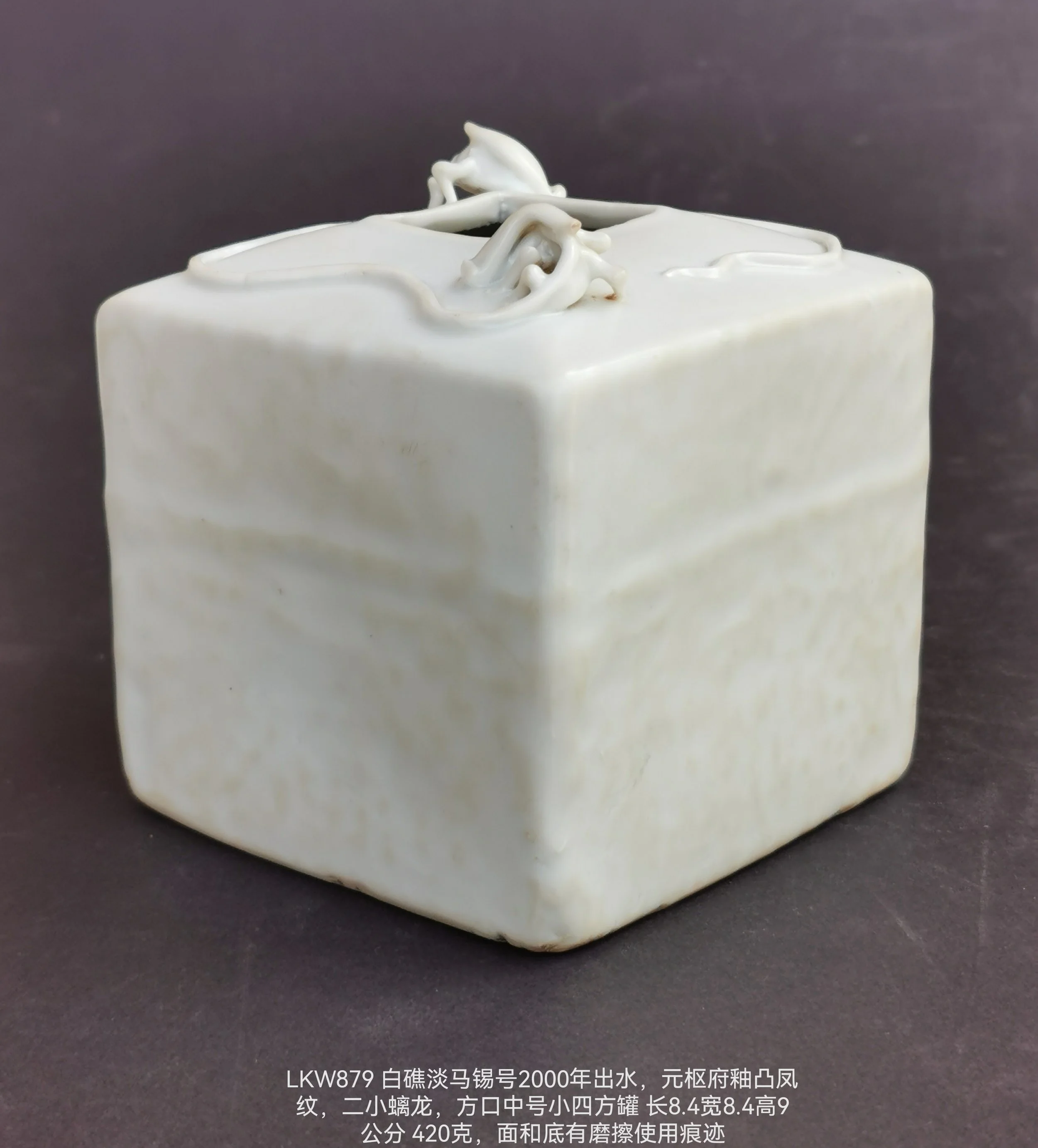
Fig.16 Temasek Wreck shufu molded relief phoenix pattern square jarlet, L8.4 W8.4 H9cm 420gm Collection of Lim Keow Wah
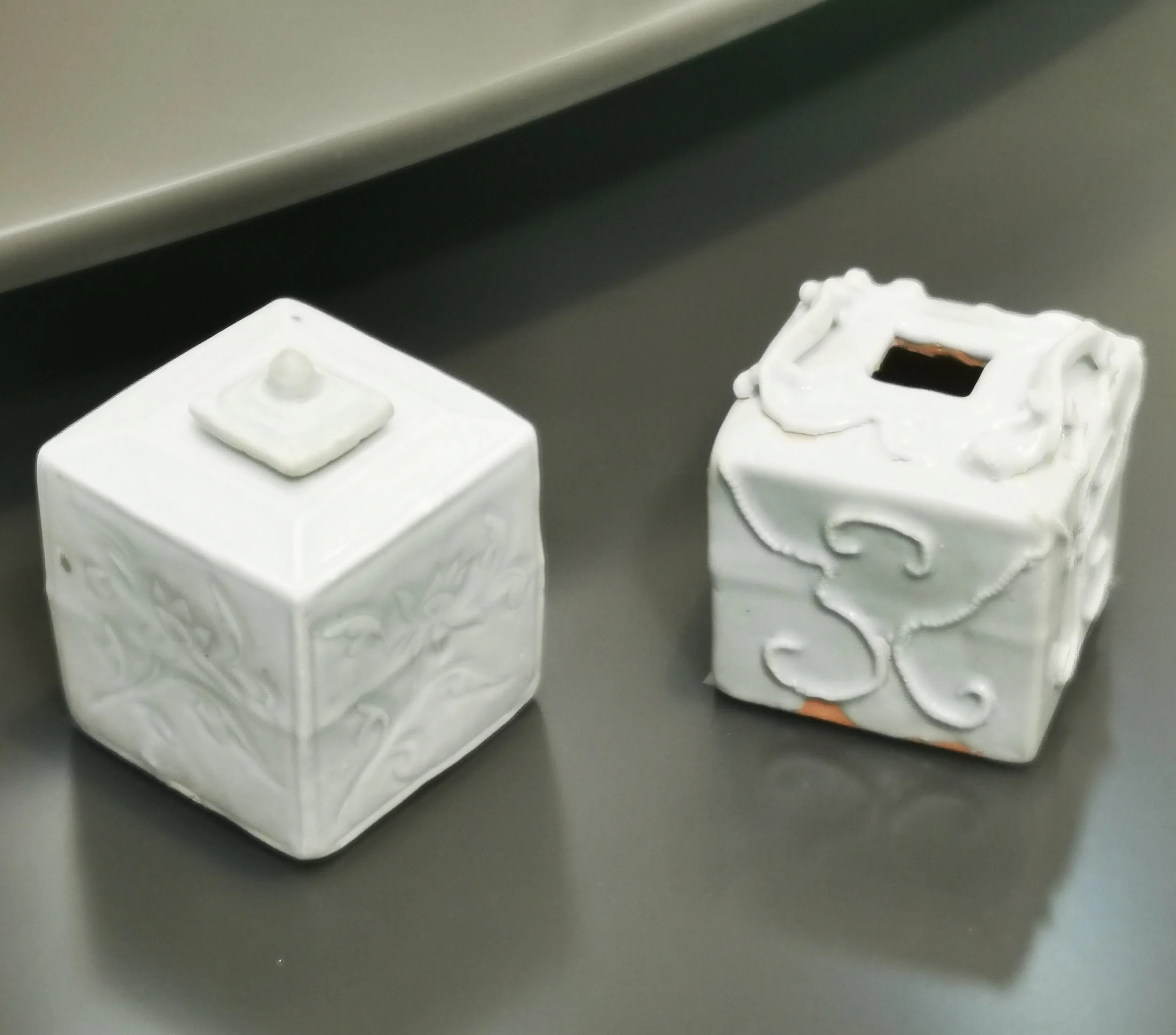
Fig.17 Shufu molded relief phoenix pattern square jarlet with square stopper Collection of Asian Civilization Museum
(2) Temasek Wreck Yuan blue-and-white medium-sized quare jarlet (Missing Lid) Fig.18
A phoenix is depicted passing through intertwined chrysanthemum scrolls. The painting is exquisite and densely covers all five visible surfaces. The glaze is bright and lustrous. The top opening is a small square formed by four inward slanting up top surfaces. Two small, spirited chi-dragon (hornless dragon) handles are pinched and applied by hand at opposite corners of the top, rendered with great expressiveness and dexterity. The jar is later fitted with an old red sandal wood stand and a custom-made lid, which further enhances its elegance.
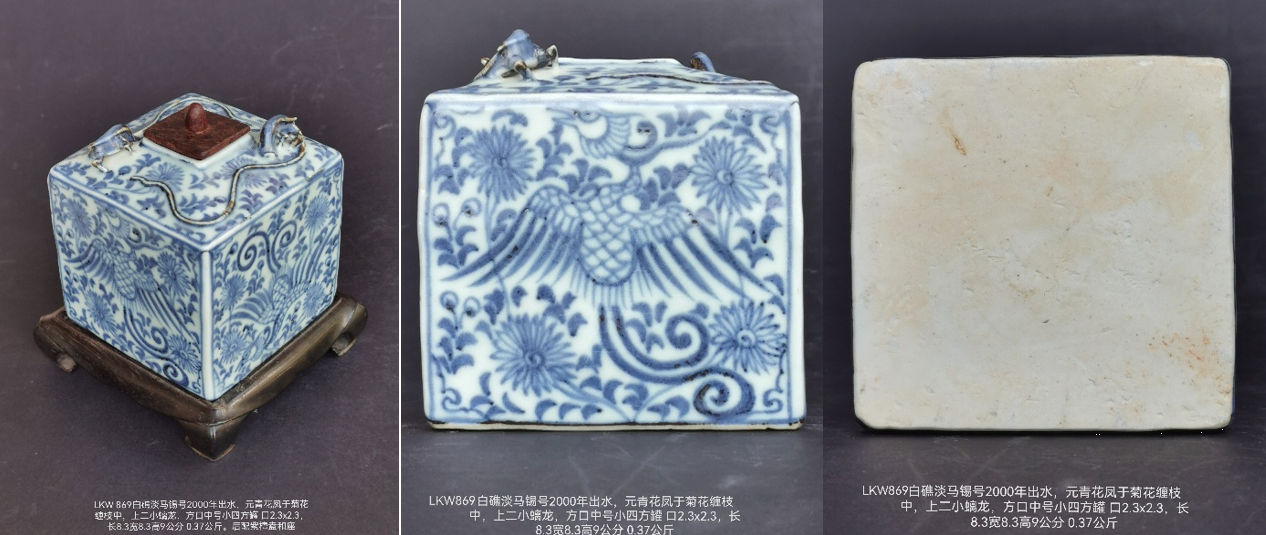
Fig. 18 Temasek Wreck Yuan blue-and-white medium-sized small square jarlet. mouth 2.3x23cm L8.3 W8.3 H9cm 370gm. Collection of Lim Keow Wah
(3) Temasek Wreck Yuan underglaze copper red square jarlet Fig. 19
Yuan Yingqing greenish-white glaze with underglaze red splashes. Where the glaze has pooled thickly around the chi-dragon (hornless dragon) motifs, it appears translucent green. The underglaze red, concentrated in small circular patches, shows a blood-red hue that stands out vividly against the greenish-white glaze. On the top, four small finely crafted chi-dragons (typically only two are seen) are pinched and applied by hand, with their backs arched high. The small square jars described in (1), (2), and (3) were all constructed using a technique of joining two separately molded sections at the mid height of the body. Such a greenish-white glazed underglaze red small square jar remains unique among the author's collection to date.
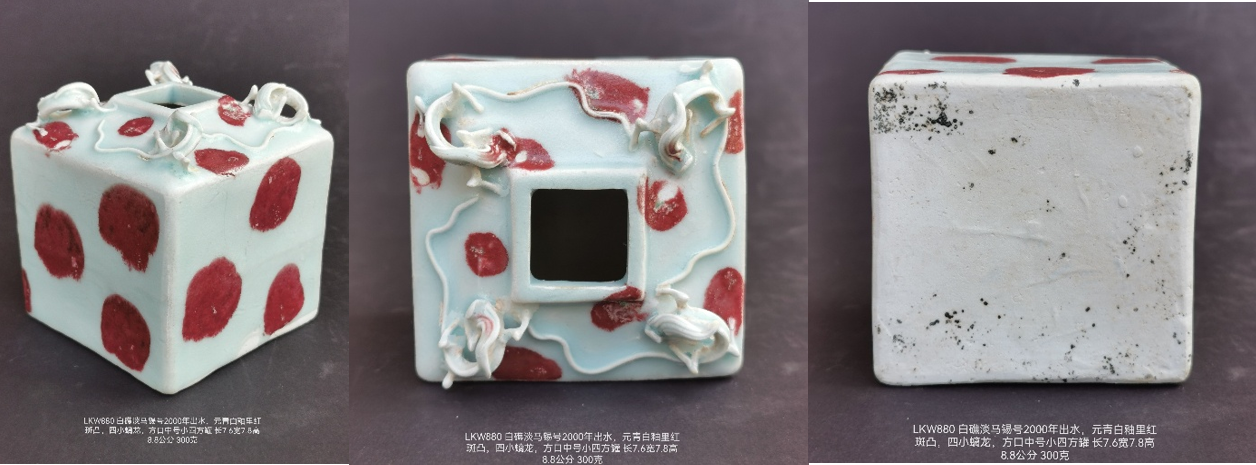
Fig. 19 Temasek Wreck Yuan underglaze copper red square jarlet L7.6 W7.8 H.8cm 300gm Collection of Lim Keow Wah
(4)Temasek Wreck Yuan blue-and-white large square jarlet recovered in 2000 Fig. 20 Yuan blue-and-white peacock amidst peony scrolls, with two small chi-dragon (hornless dragon) and chrysanthemum motifs on top. This is a large example of a small square jarlet. It features a particularly round mouth, and the design of the chi-dragon heads suggests that it was never intended to have a lid. While typical small and medium-sized square jars have a horizontal joint line from the two-section molding joint at the middle height of the body and have square mouth, this large small square jarlet deviates from the norm: it has no horizontal joint line at the midsection and has a round mouth instead. It does not have a flat base but rather a foot ring. Inside the foot ring, there are five marks often referred to as "thrown glaze" marks—possibly kiln or merchant marks. The glaze shows numerous corrosion pits from prolonged submersion in seawater.
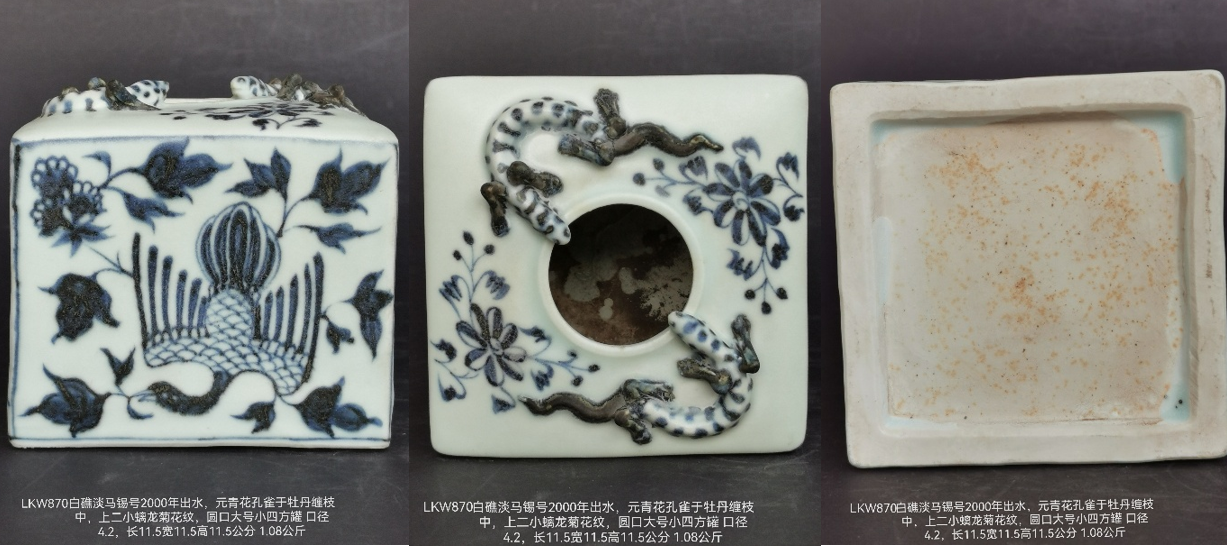
Fig. 20 Temasek Wreck Yuan blue-and-white large square jarlet with peacock and peony scroll mouth4.2 L11.5 W11.5 H11.5 cm 1.08kg Collection of Lim Keow Wah
(5) Temasek Wreck Yuan blue-and-white two-lugs six-lobed small round jarlet Fig. 21
The greyish-blue tone of the decoration more closely resembles local cobalt materials. Unlike the typical egg white standard Yuan blue-and-white ware, the Shufu white glaze here is opaque and matte white. In several places, small circular or intersecting cracks from the firing process can be observed. Similar small jar fragments recovered by the archaeological team from the Temasek Wreck at Horsburgh is shown in Fig. 22. On these fragments, residues of marine tubular worm remain inside the mouth, and corals are attached to the exterior
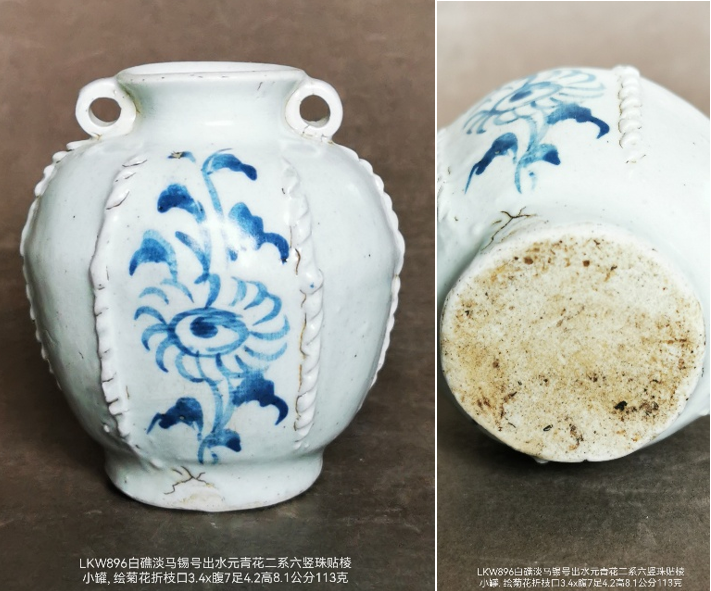
Fig. 21 Temasek Wreck Yuan blue-and-white two-lug six-lobed small round jarlet with vertical bead Lines mouth3.4 body7 foot4.2 H8.1cm, 113gm Collection of Lim Keow Wah
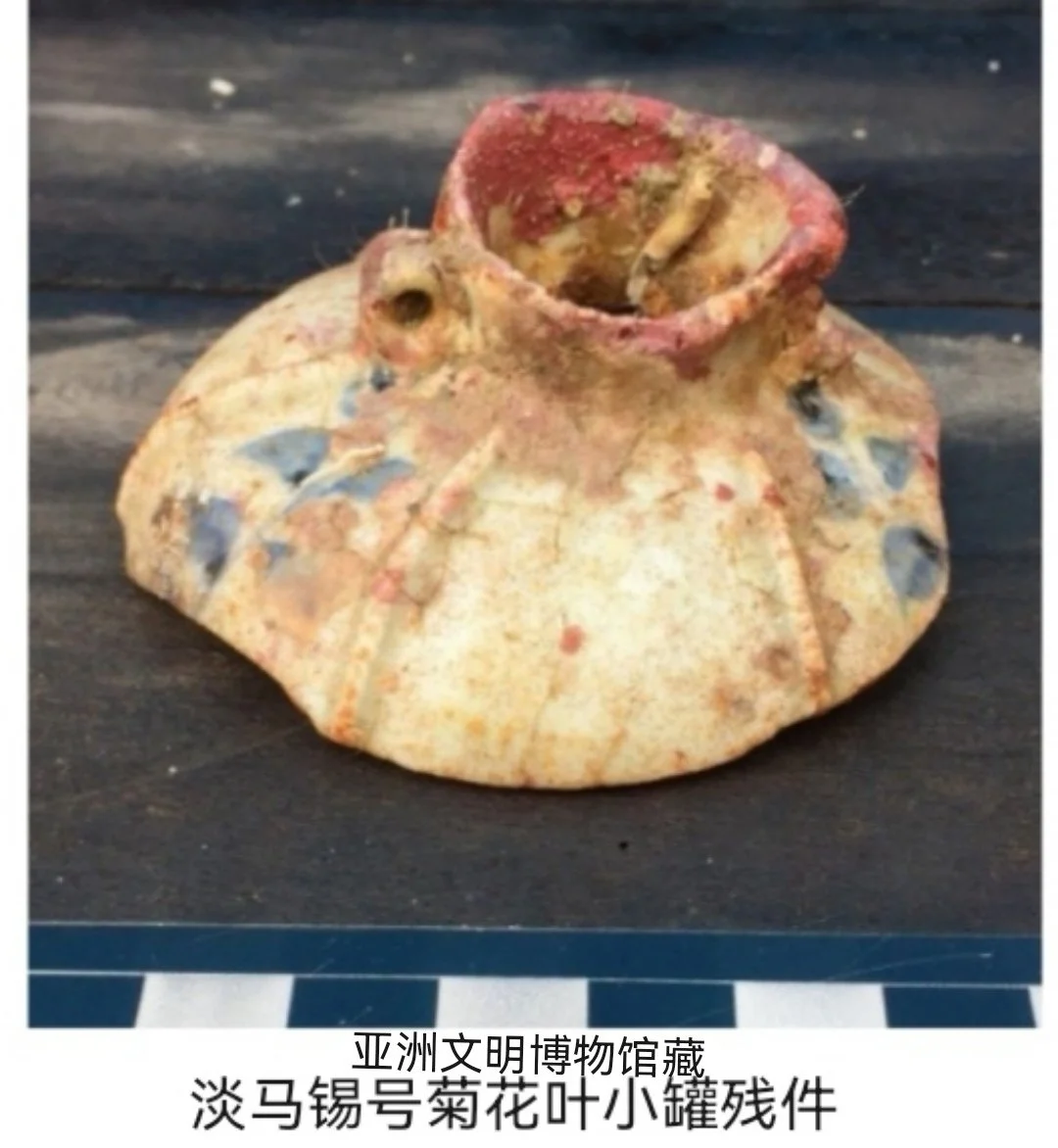
Fig. 22 Temasek Wreck archaeological excavation Yuan blue-and-white two-lugs six-lobed small round jarlet shard. Collection of Asian Civilization Museum
(6) Temasek Wreck Yuan blue-and-white tea cup & saucer (Zhan Tuo) recovered in 2000 Fig.23 The cup (zhan) features a water chestnut flower rim, with an interior decoration of a mandarin fish among waterweed and an exterior decoration of chrysanthemum scrolls. The saucer (tuo) has a sunflower rim, on its interior are three fishes swimming amidst waterweed. A band of honeysuckle scrolls runs along the rim edge. Inside the raised ring (for accommodating the cup) in the center is a lotus motif.
The painting is delicate, vivid, and highly skilled. The artist spared no expense in using rich, intense, emerald-blue Persian blue cobalt pigment. Where the cobalt is thickly pooled, pronounced sunken pitting is visible, giving the two-dimensional painting a three-dimensional effect. Comparable example includes a saucer fragment excavated by the archaeological team from the Temasek wreck at Horsburgh Light Fig. 24 and a saucer excavated from the Yuan-dynasty Zhang Rong family cemetery in Jinan City, Shandong Province Fig. 25.
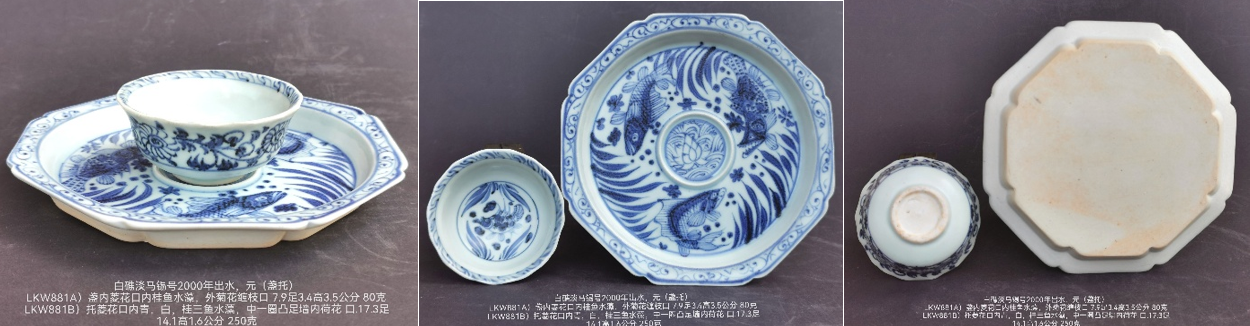
Fig. 23 Temasek Wreck Yuan blue-and-white tea cup & saucer (zhan tuo) Collection of Lim Keow Wah
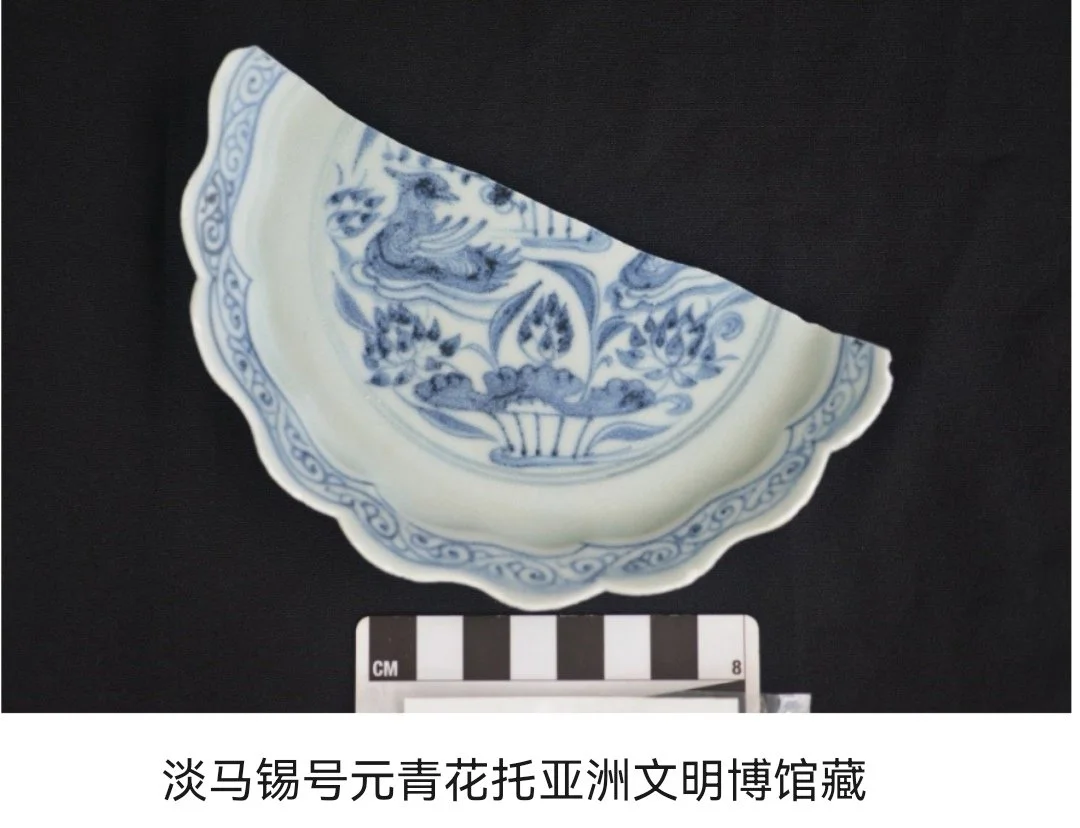
Fig. 24 Temasek Wreck Yuan blue-and-white saucer shard Temasek wreck archaeological excavation. Collection of Asian Civilization Museum
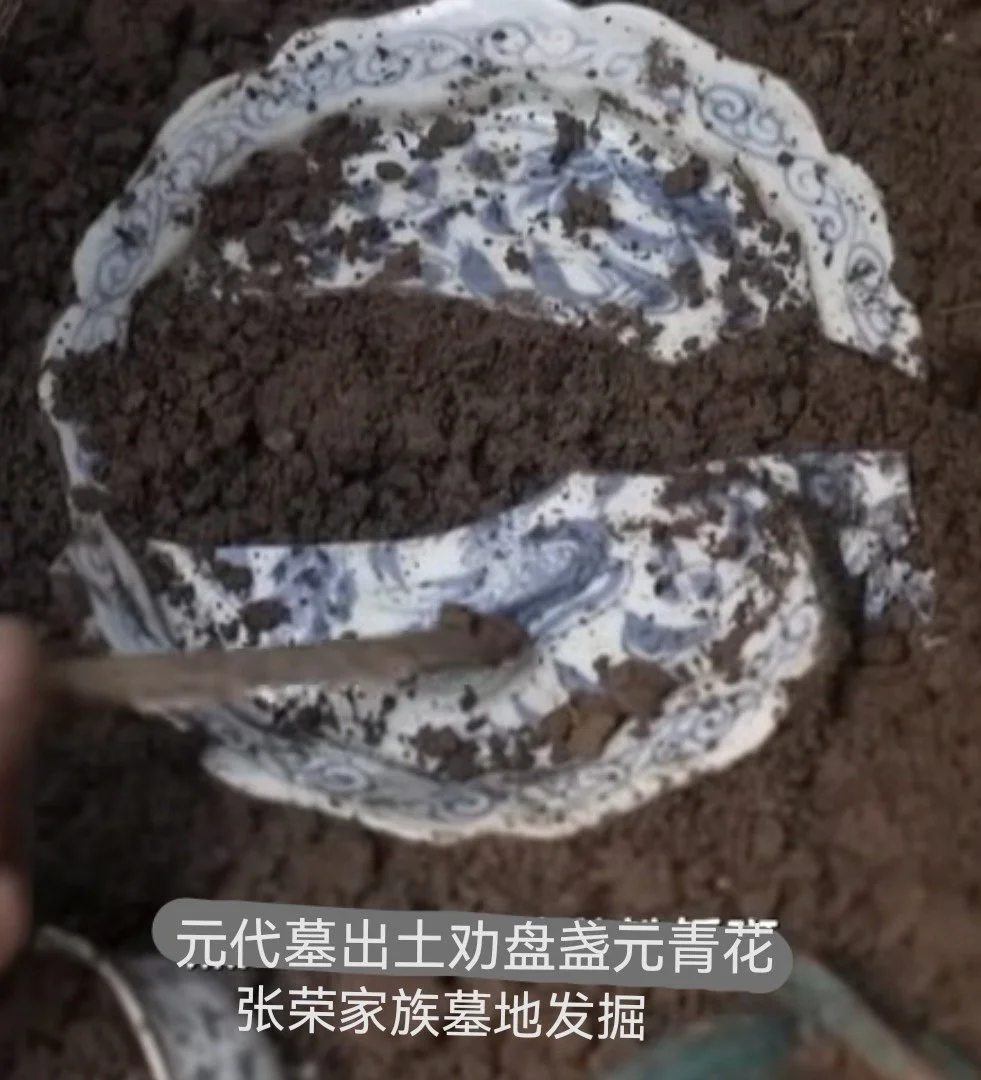
Fig. 25 Saucer shard excavated from the Yuan-dynasty Zhang Rong family cemetery in Jinan City, Shandong Province
(7)Temasek wreck Yuan blue-and-white Hutian kiln pear shape tea pot Fig.26
The cover knob is shaped like a pearl, featuring a honeysuckle pattern and a suspension hole. The spout is adorned with a flaming pearl motif, the belly with an interlocking peony design, and below the belly, a face up double-layer lotus petal pattern. A chi dragon handle is applied. The thin foot has a flat base with a slight depression at the center. The neck of this Yuan dynasty pear-shaped teapot appears slimmer or more elongated compared to typical examples of the same type. When paired with the saucer and cup in Fig. 27, this pear-shaped teapot forms a complete tea set.
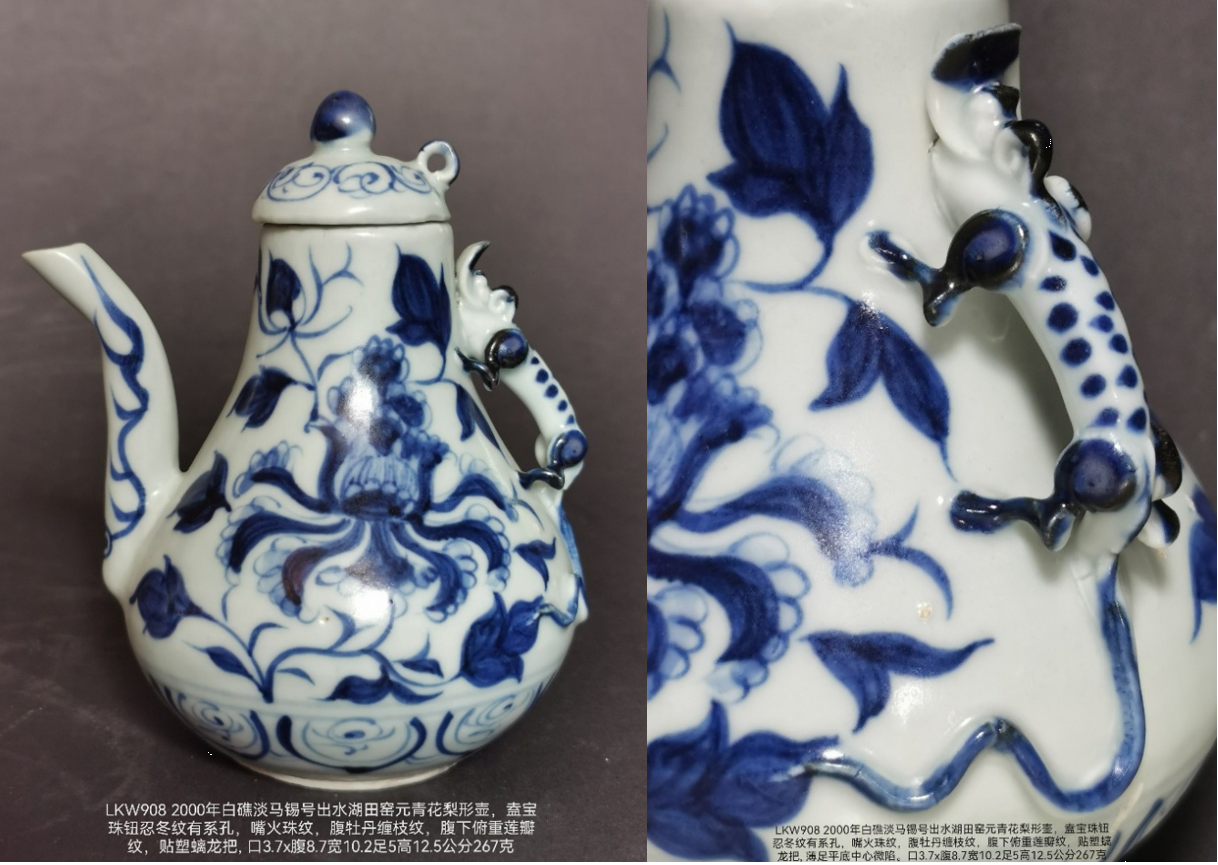
Fig.26 Temasek Wreck Yuan blue-and-white pear shape tea pot mouth3.7 body 8.7 Width10.2 foot5 H12.5cm 267gm Collection of Lim Keow Wah
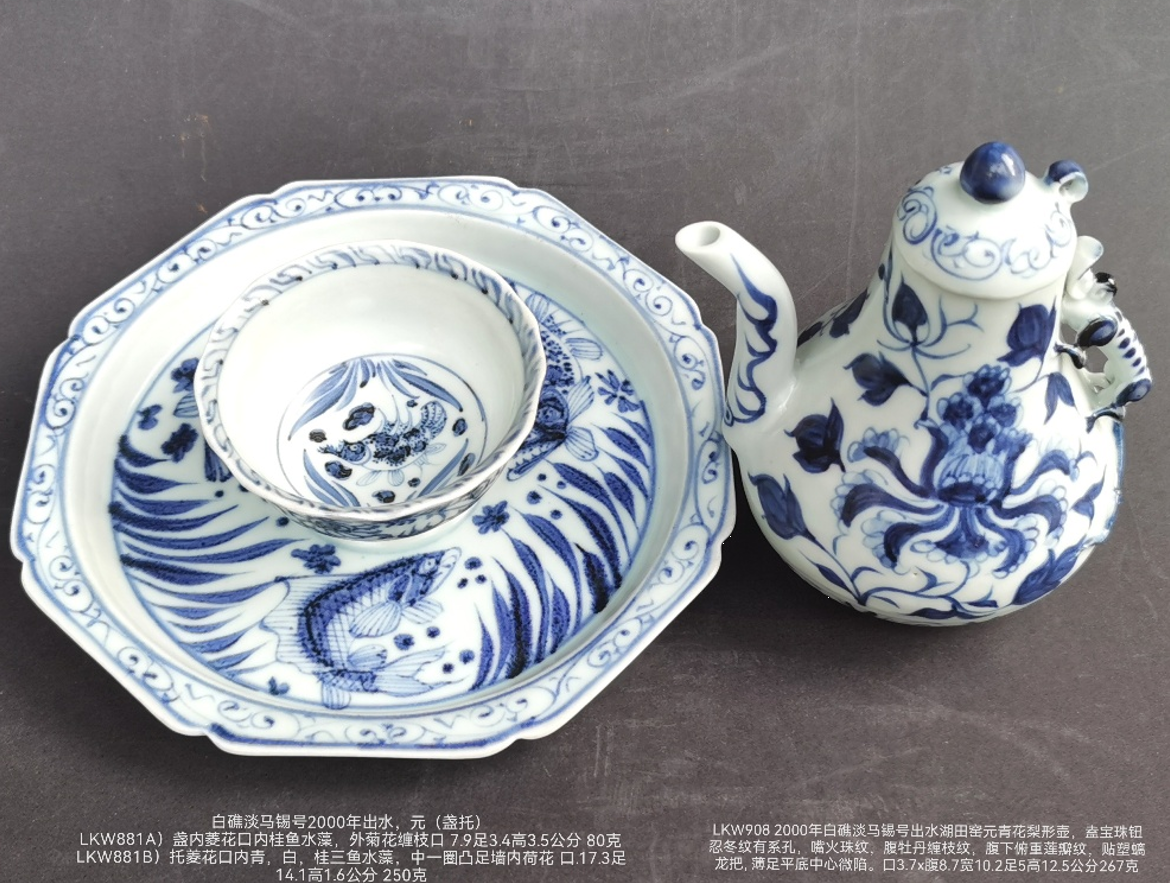
Fig. 27 Temasek Wreck Yuan blue-and-white pear shape tea pot paired with the saucer and cup forms a complete tea set. Collection of Lim Keow Wah
Hutian Kiln: Items (1) through (7) all belong to the Hutian Kiln. They are characterized by their small size, yet they are more refined than the typical Yuan dynasty blue-and-white wares of the Philippine type. The flat base has a concave depression pressed in the center with a finger during production to ensure stability when standing. All of their outer bases are coated with protective clay slip, resulting in wrinkled/crackled glaze and flint red iron oxide reddish spots.
(8) Temasek Wreck Yuan blue-and-white censer with tripod beast legs and dog handles Fig. 28.
Very adorable spotted dogs form the two handles of the censer. The dogs stand with their two hind feet resting on the beast head on the belly, their two front feet resting on the rim of the censer, heads raised, long drooping ears, and wearing neck collars. The rim of the censer features a single square scroll pattern, while the neck has a wave crest pattern. The shoulder is decorated with a scrolling grass motif. On the belly are two three-clawed dragons in profile (one with its head turned back). Tripod outward-flaring legs with beast head on the top. However, the front foot is not aligned with the front center of the censer; the two rear feet and the two handles are asymmetrically arranged. The Persian cobalt blue (su mali qing) is very rich and intense.
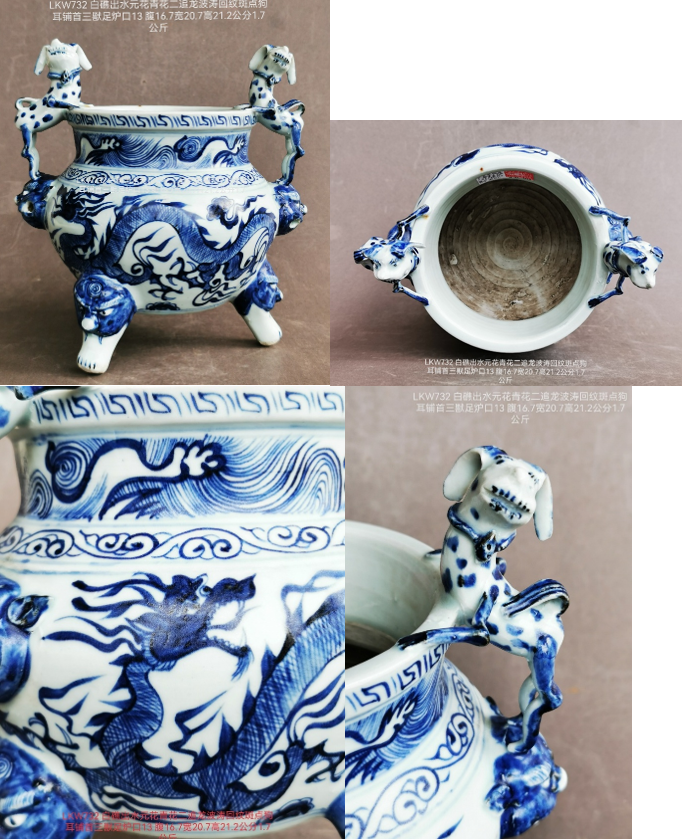
Fig. 28 Temasek Wreck Yuan dynasty blue-and-white censer with tripod beast legs and dog handles, rim13.0 body16.7 width20.7 H21.3cm 1.7kg. Collection of Lim Keow Wah
(9)Temasek Wreck ruyi rope handle tripod legs incense burner Fig. 29
Pattern: The body is dark blue base with white pattern, and the four ruyis are covered with miscellaneous treasures such as fire pearl, coral, ivory, bronze coin, Chinese almanac(通胜), double gourd, gold ingot, silver ingot, and conch. Three-cylindrical solid tall foots with spiral scroll pattern. Persian smalt (Sumaliqing)with clear rustic spots condensed, flowing, depression and strong rainbow.
Inner side of incense burner is egg white glaze appears as a fine wavy texture, and the foot and the bottom of the incense burner are not glazed, but they are coated with an uncommon layer of smooth and white decorating paste. There is a blue & white incense burner on a white base in the Forbidden City Museum in Beijing, having a band of silk brocade pattern below the rim, up facing ears, the shape is similar but rounded bottom, and the tripod-legged is hollow.


Fig. 29 Temasek Wreck Yr. 2000 recovered incense burner, blue ground, large ruyi pattern, Yuan blue & white tripod flat-bottom, rim11.2 height14.9cm 0.411kg, Collection by Lim Keow Wah
(10) Temasek Wreck Yuan blue-and-white octagonal garlic bulb yuhuchun vase Fig. 30
It features a distinctive baimiao (plain line drawing) style of fish-scale waves and a wave-ripple ground. Applied onto the surface is a vividly modeled, yingqing (greenish white-ware) ascending dragon coiled around the vase. The high foot is decorated with a double layer of large and small lotus petals, which is scarcer than the more commonly seen single-layer petal design. Garlic bulb-mouthed vases are very rare among Yuan blue-and-white wares. The combination of the garlic mouth, the ascending dragon, and the special decorative motifs leads the author to believe that this is an artifact of exceptional design and craftsmanship. Although it is a small-to-medium-sized vessel, it is highly worthy of appreciation and preservation. It also exemplifies the distinctive characteristics of artifacts from the Horsburgh Reef that differ from ordinary wares. See Fig. 31 for a fragment of a similar Yuan blue-and-white vessel archaeologically salvaged from the Temasek Wreck at Horsburgh White Reef.
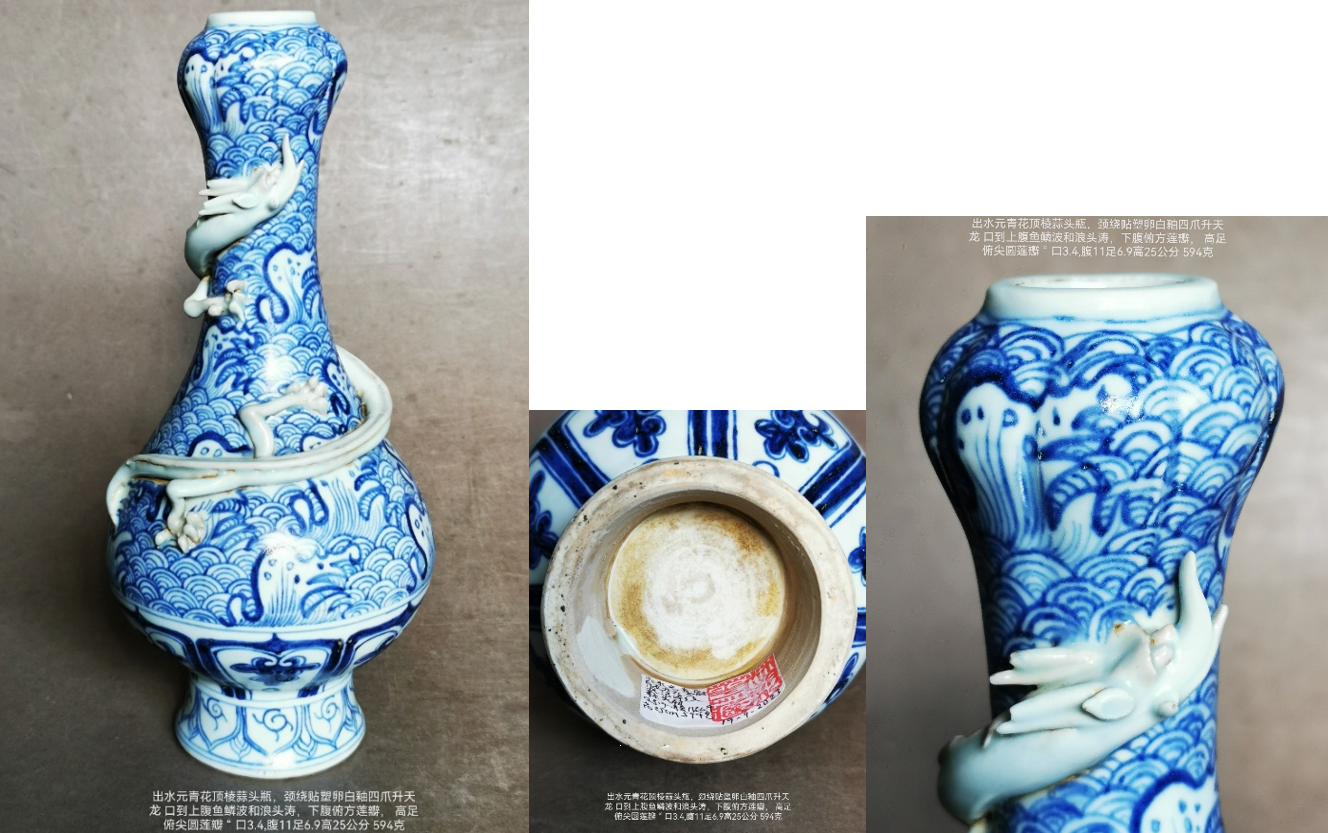
Fig. 30 Temasek Wreck Yuan blue-and-white octagonal garlic bulb-mouth Yuhuchun vase mouth3.4 body12 foot6.9 H25cm 0.594kg Collection by Lim Keow Wah
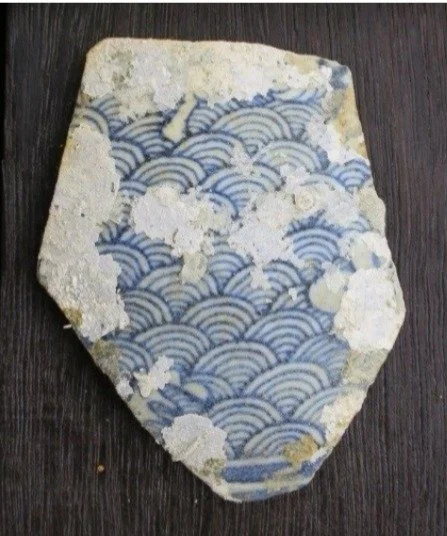
Fig. 31 Yuan blue-and-white shard archaeologically salvaged from the Temasek Wreck at Horsburgh White Reef.
(11)Temasek Wreck five fishes octagonal yuhuchun vase Fig. 32
Body pattern: mackerel, Chinese perch, carp, and fish swimming in the water wavelets of fish scale style. Generally, Yuan blue and white are separated into multiple layers by horizontal lines, and there are many different sections of drawings, as many as eight layers, but this vase has only one with no separation, It is rare to see ripples in the form of fish scale all over the body. The rust spots of Persian Smalt (Su Ma Liqing) are condensed and mostly black to brown. white egg white glaze is thick and good lustre, almost not affected by sea water. The bottom of the vase is glazed, and the ring foot has flint red on the inner wall.


Fig. 32 Temasek Wreck Yr. 2000, octagonal Yuan blue and white yuhuchun vase with five fishes in ripples. rim8 body14.5 foot7.8 high29cm 0.81kg Collection by Lim Keow Wah
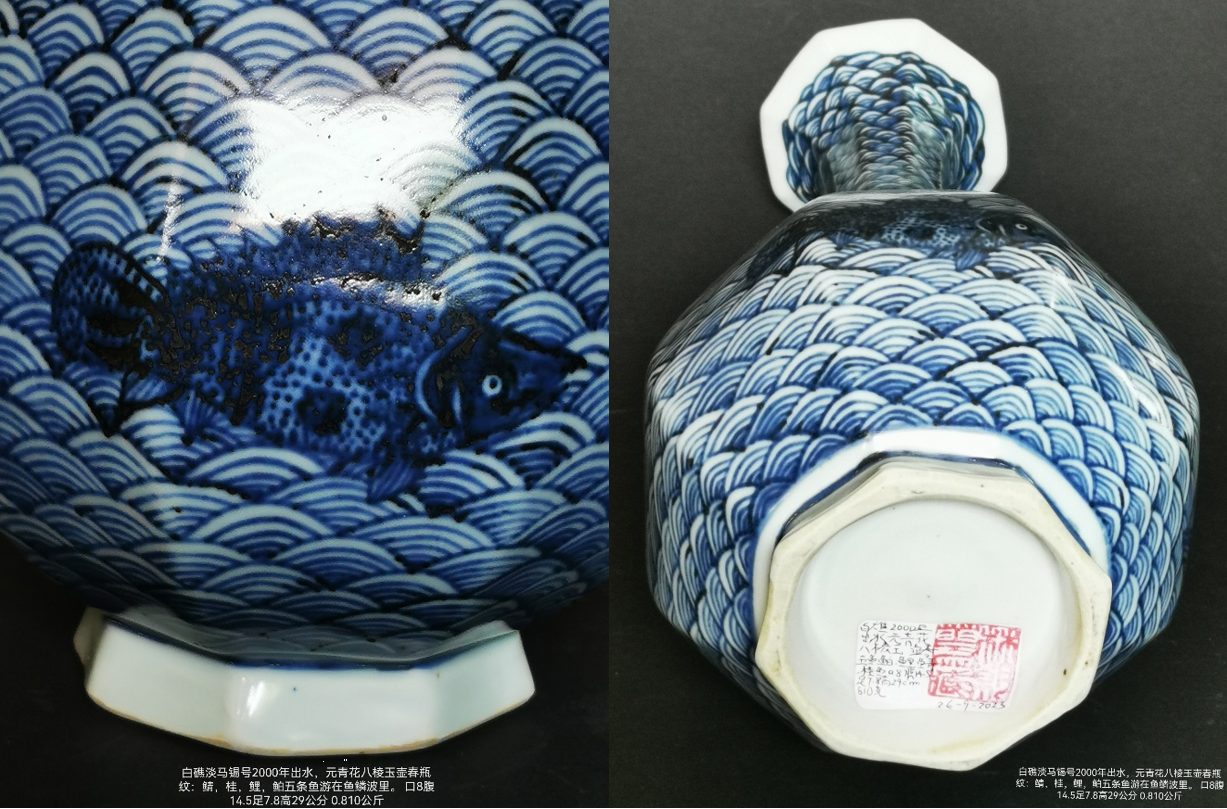
Fig. 33 Temasek Wreck Yr. 2000, octagonal Yuan blue and white yuhuchun vase with five fishes in ripples. rim8 body14.5 foot7.8 high29cm 0.81kg Collection by Lim Keow Wah
(12) Temasek Wreck Yuan blue-and-white multi-faceted octagonal yuhuchun vase, salvaged in 2000 Fig. 34
Neck decoration: banana leaf, coin, flame/scroll motifs. Body decoration: lingzhi fungus, chrysanthemum, peony, camellia. Below the belly: face up lotus petals. Foot: face down pointed and curve edges double layers lotus petals.
The Persian smalt cobalt blue exhibits a rainbow sheen and numerous corrosion pits. The foot has flint red (iron-red spots), and the interior of the foot is glazed.
This multi-faceted eight-sided design is far more complex and refined than a simple eight-sided vase, and it is also a rare piece among special-form vases (yuhuchun type). A fragment of a similar vessel Fig. 35 was also archaeologically excavated at St. Andrew's Cathedral in Singapore.
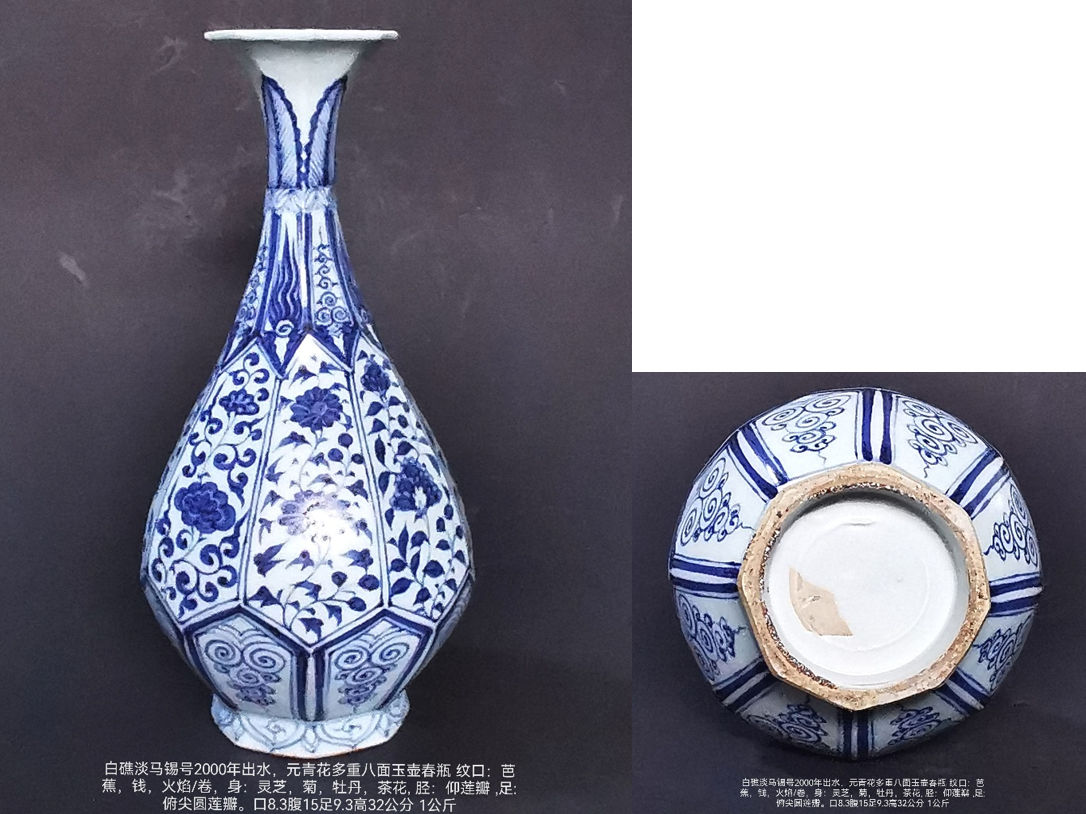
Fig. 34 Temasek Wreck Yuan blue-and-white multi-faceted octagonal yuhuchun vase, salvaged in 2000. mouth8.3 body15 foot9.3 H32cm 1kg Collection by Lim Keow Wah
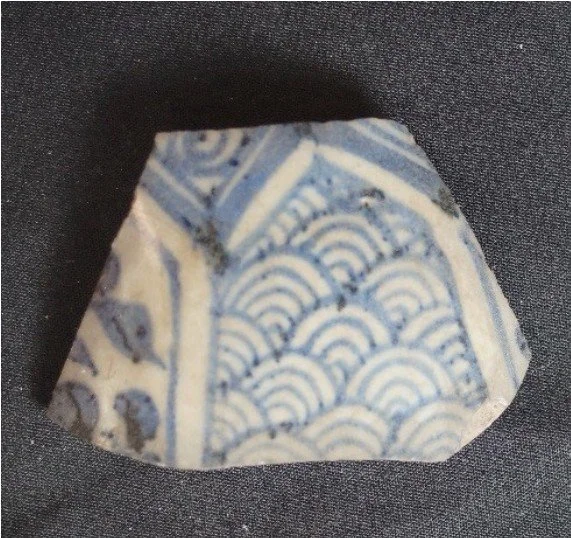
Fig. 35 Yuan blue and white multi-faceted eight-sided yuhuchun vase shard archaeologically excavated at St. Andrew's Cathedral in Singapore
(13) Temasek Wreck Yuan blue-and-white peacock yuhuchun vase Fig. 36
Decoration: Scrolling grass motif on the rim; on the body, a pair of peacocks interlocking peony scrolls, scrolling grass, and upturned lotus petals. Notably, the entire surface is sprinkled with blue dots resembling raindrops — a feature not seen in any other known example. The relatively high ring foot shows flint red iron-red oxide blush on the underside. The exposed clay on the base has two areas with flung glaze spots. The vivid emerald-blue Persian cobalt has dark crystalline speckles and pits where the pigment is thick. The peacock and peony are executed with skilled brushwork. The pale blue egg-white (luanbai) glaze has slightly lost its luster due to seawater erosion. In terms of weight, this piece belongs to the typically lighter category of yuhuchun vases.
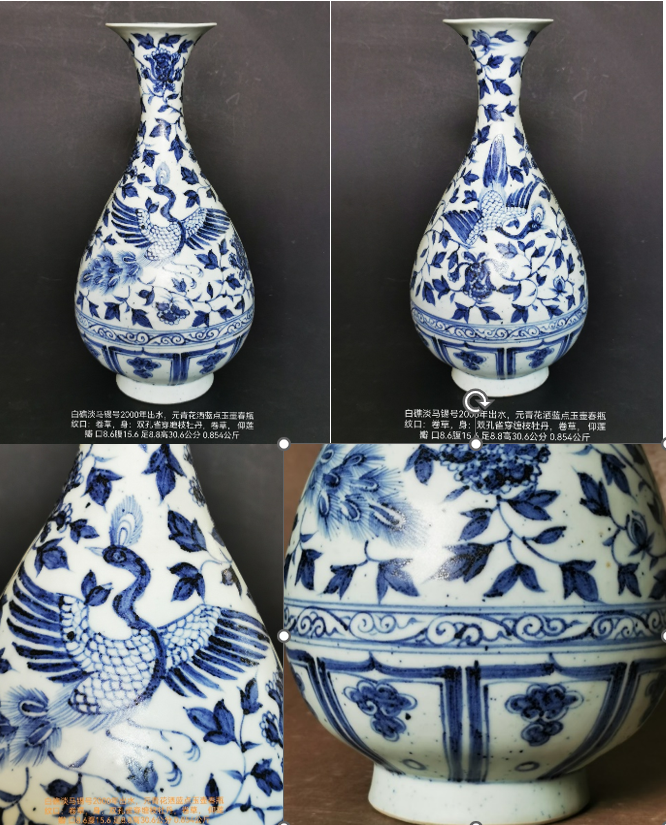
Fig. 36 Temasek Wreck Yuan blue-and-white peacock yuhuchun vase mouth 8.6 body15.6 foot 8.8 H30.6cm 0.854kg Collection by Lim Keow Wah
(14) Temasek Horsburgh Wreck Yuan blue-and-white ruyi horse yuhuchun vase Fig. 37.
Neck: plantain leaves and a single square scroll pattern. Shoulder: descending lotus petals and honeysuckle (scroll) motif. Belly: three large ruyi-shaped reserves, inside which horses are painted amidst fish-scale waves. Below the belly: honeysuckle (scroll) motif and head up lotus petals.
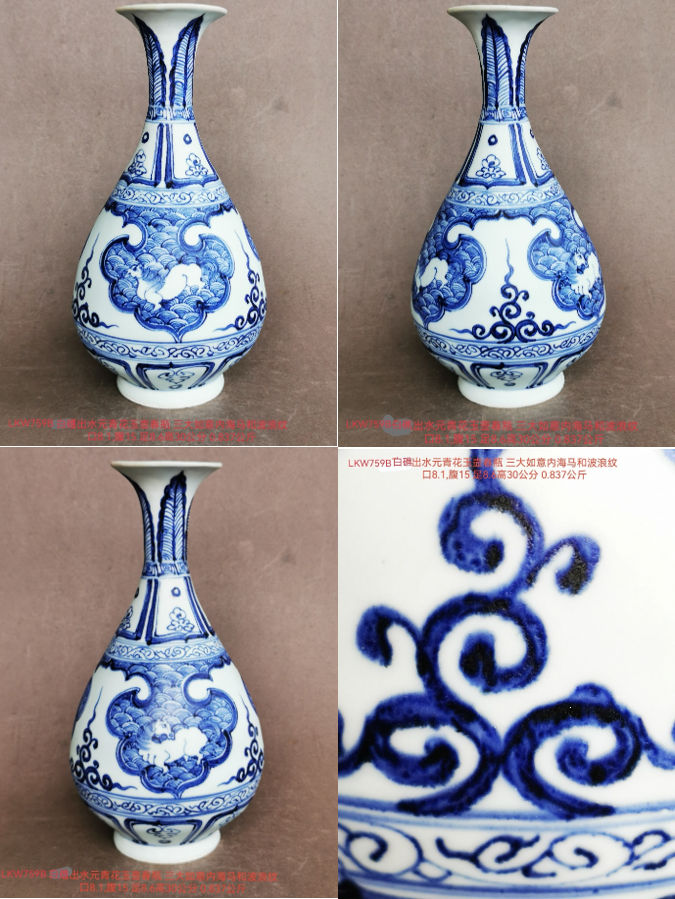
Fig. 37 Temasek Wreck Yuan blue-and-white ruyi horse yuhuchun vase rim8.1 foot8.6 body15 Ht30cm 0.837kg Collection by Lim Keow Wah
(15) Temasek Horsburgh Wreck Twin lions & phoenixes double gourd vase Fig. 38 pattern: copper coin, twin phoenixes (male three strands and female single strand tail) among peony scroll, wave crest, twin lions (one of the lions looks back) chasing ribbon hydrangea, spiral scroll, lotus petals. Bright emerald blue Persian smalt painting with much rainbow and black spots, thick and cracked decorating clay on the base, large crackle glaze with rusty lines, strong rainbow, yellow bubbles and corrosion pits. The feet are stained with bronze patina.
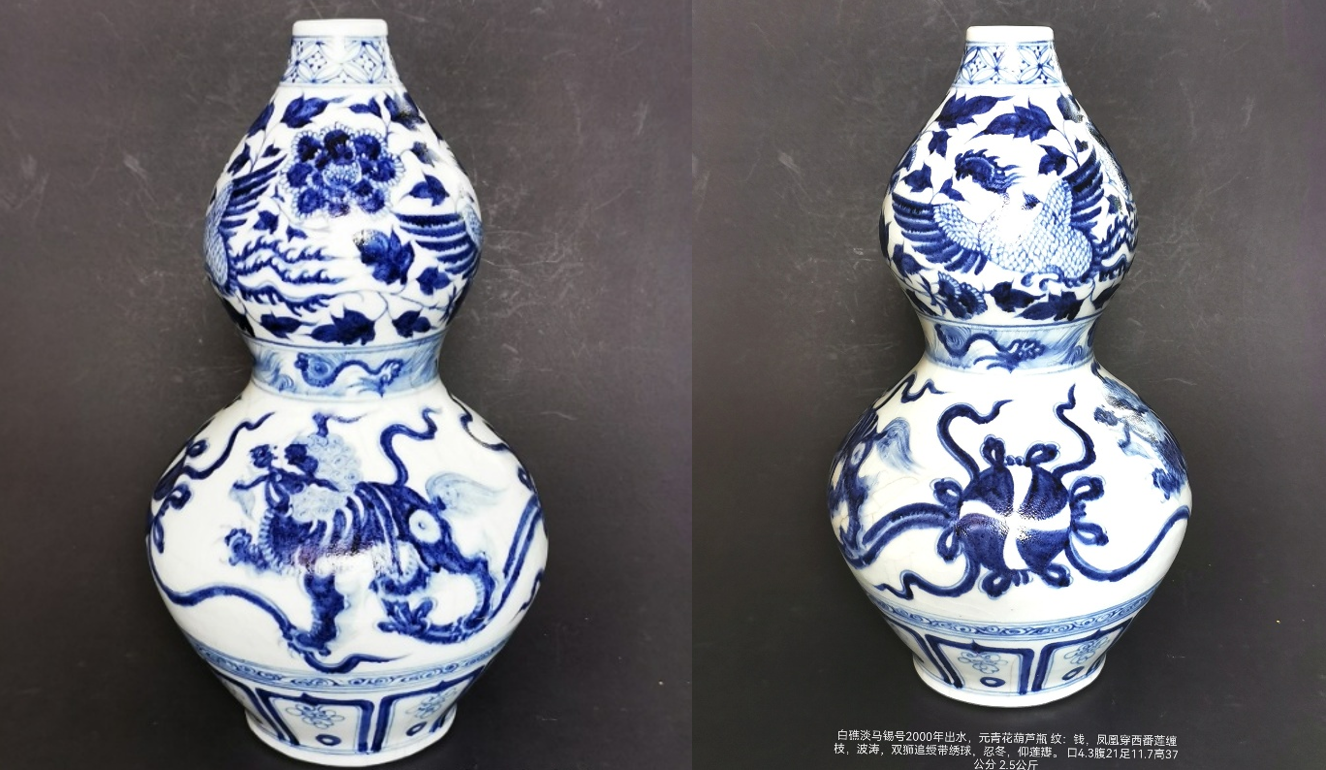


Fig. 38 Temasek Wreck, 2000, Yuan blue & white lion, phoenix, peony double gourd vase rim4.3 body21 foot11.7 Ht37cm 2.5 kg, Collection by Lim Keow Wah
(16) Temasek Wreck Yuan blue-and-white blue base white painting octagonal double gourd vase Fig. 39
Decoration: coin patterns; four tiers of upturned and downturned lotus petals; interlocking passion flowers, brocade ground, reserved panels with flowering branches of camellia, chrysanthemum, peony, and passionflower.
A lavish amount of imported Persian cobalt blue was used. On the blue areas, there are dark crystalline speckles (black flaws), depressions, cobalt crystal formations with a silvery iridescent sheen (tin-flash), and a rainbow sheen iridescence. The base is coated with a special, very white, fine protective clay slip.
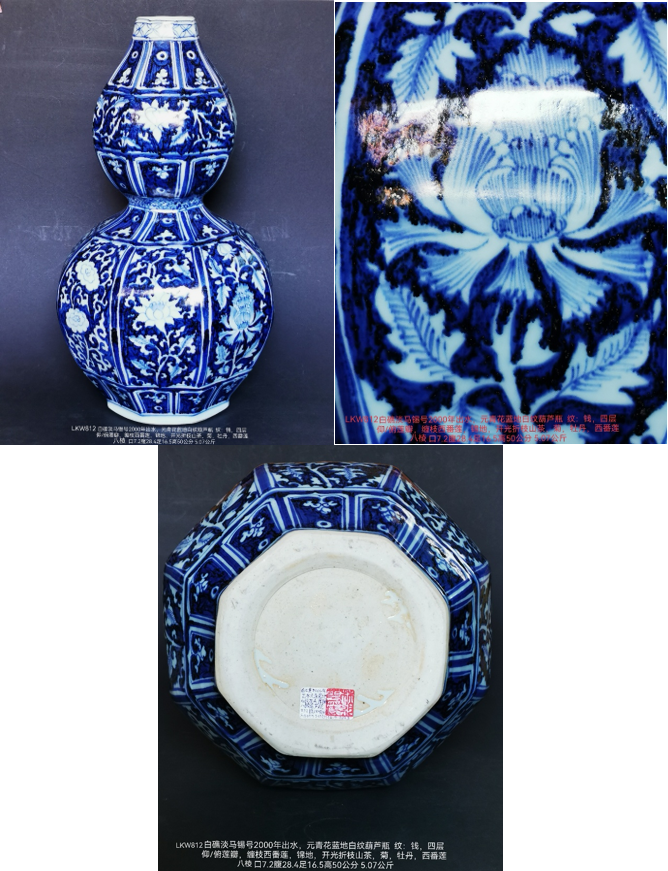
Fig. 39 Temasek Wreck Yuan blue-and-white, blue base white painting octagonal double gourd vase. mouth7.2 body28.4 foot16.5 Ht50cm 5.07 kg Collection by Lim Keow Wah
(17) Temasek Wreck Yuan underglaze copper red dish with dragon, Fig. 40
On the interior, a three-clawed upright dragon is depicted amidst tadpole-shaped clouds, on the exterior band, there is a design of peonies scrolls. The exterior wall of the dish features upturned lotus petals. On the exposed base, an eight-character reign mark in cobalt blue is inscribed vertically: " 至正六年八月吉日"(Zhizheng Liu Nian Ba Yue Ji Ri), an Auspicious Day in the Eighth Month of the Sixth Year of the Zhizheng至正 Era, corresponding to 1346 CE). The greyish-blue regular-script (楷书kaishu ) calligraphy exhibits the refined elegance of Emperor Huizong's "Slender Gold" (Shoujin瘦金体 ) style. When acquired, the entire outer base was covered with iron rust stain; it was only after partial cleaning that the date mark was revealed. If this dating is correct, the sixth year of Zhizheng至正 (1346) is very close to the period preceding the sinking of the Temasek Wreck at White Reef. The outer base is coated with a layer of snowy-white protective clay slip. The milky-white Shufu-type glaze is covered with seawater corrosion pits and some aged, yellowed bubbles.
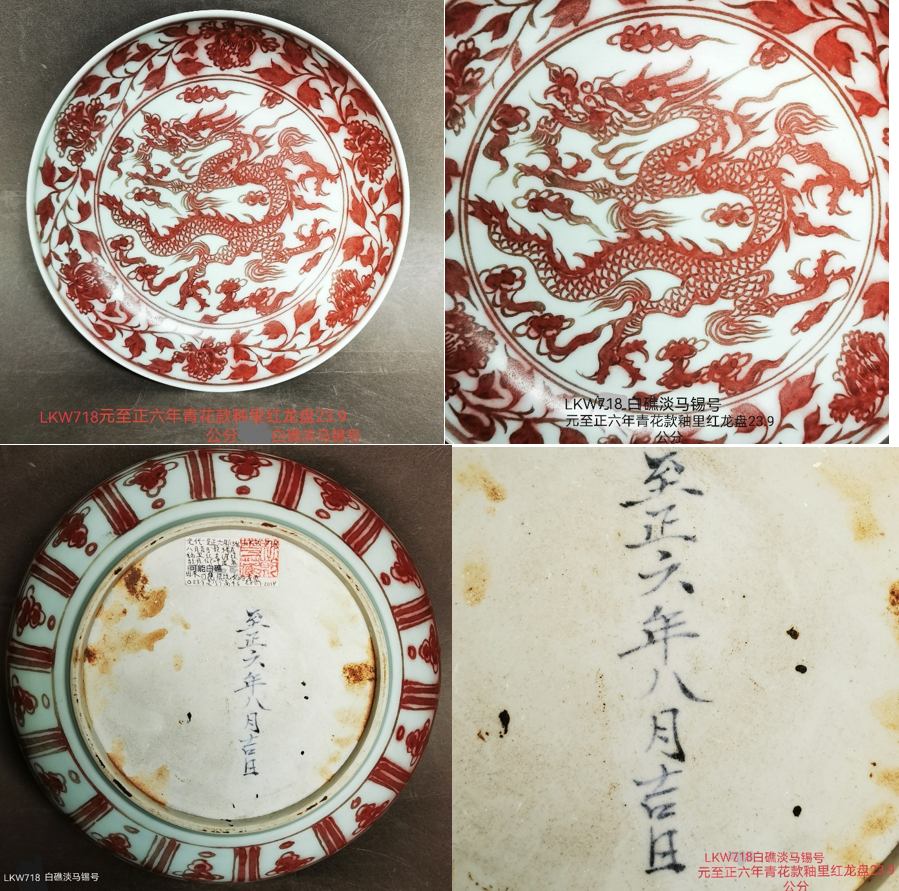
Fig. 40 Temasek Wreck Yuan underglaze copper red dragon dish with " 至正六年八月吉日" mark mouth23.9 foot15.9 Ht4.6cm Collection by Lim Keow Wah
(18) Temasek Wreck Yuan Celadon Longquan large dragon dish with lobed flower-shaped rim, Fig. 41
The interior cavetto is carved with a band of interlocking scrolls. At the center is a molded design of a three-clawed upright coiled dragon. The powder-green (fenqing) glaze features corrosion pits, aged black bubbles, and a soft, lustrous sheen. The unglazed outer base shows extensive flint red iron oxide reddish patches.
Several complete but medium-sized Longquan dishes have also been archaeologically recovered from Horsburgh White Reef, as shown in Fig. 42.
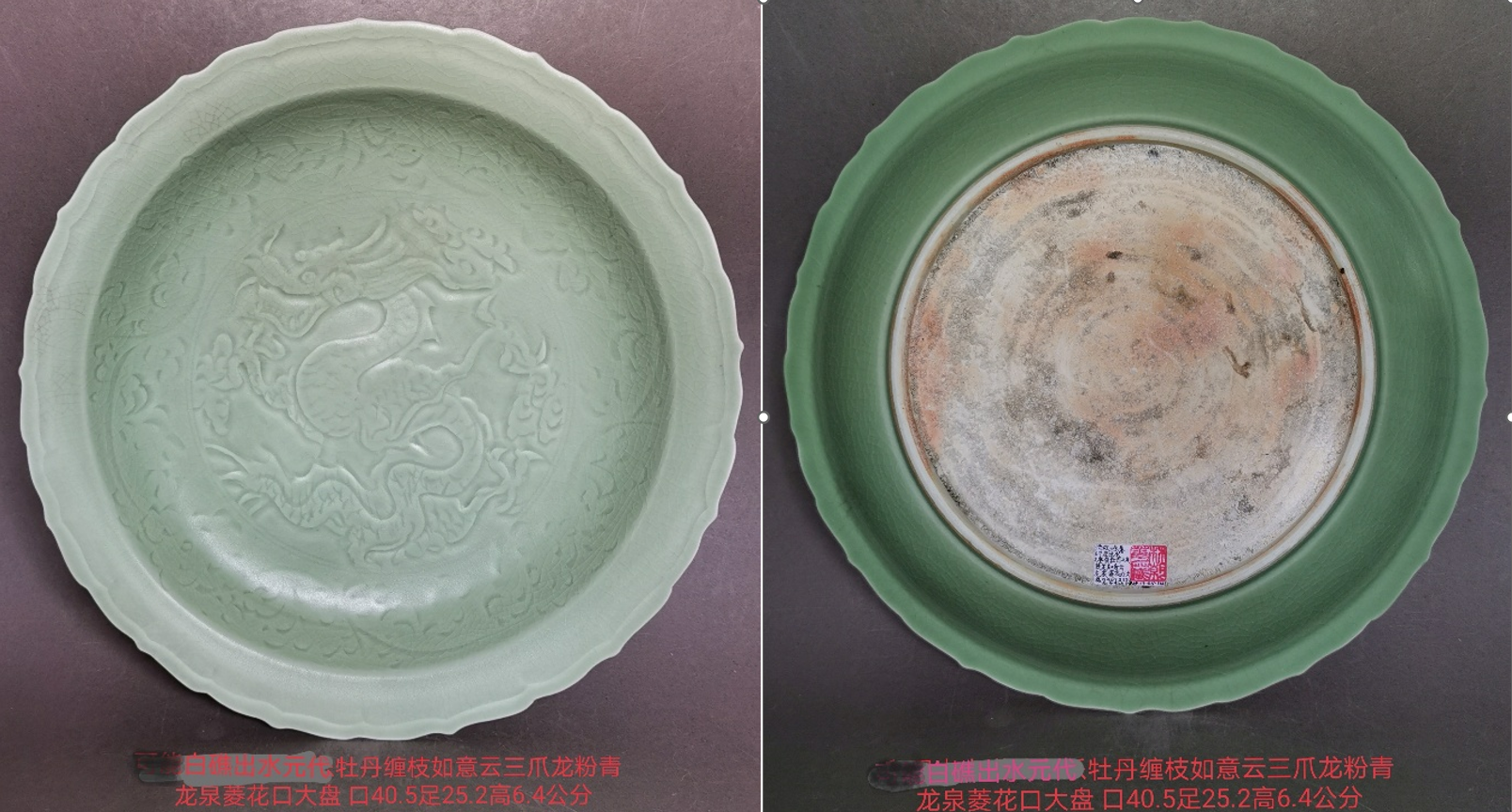
Fig. 41 Temasek Wreck Yuan celadon longquan large dragon dish rim40.5 foot25.2
Ht6.4cm 3.74kg Collection by Lim Keow Wah
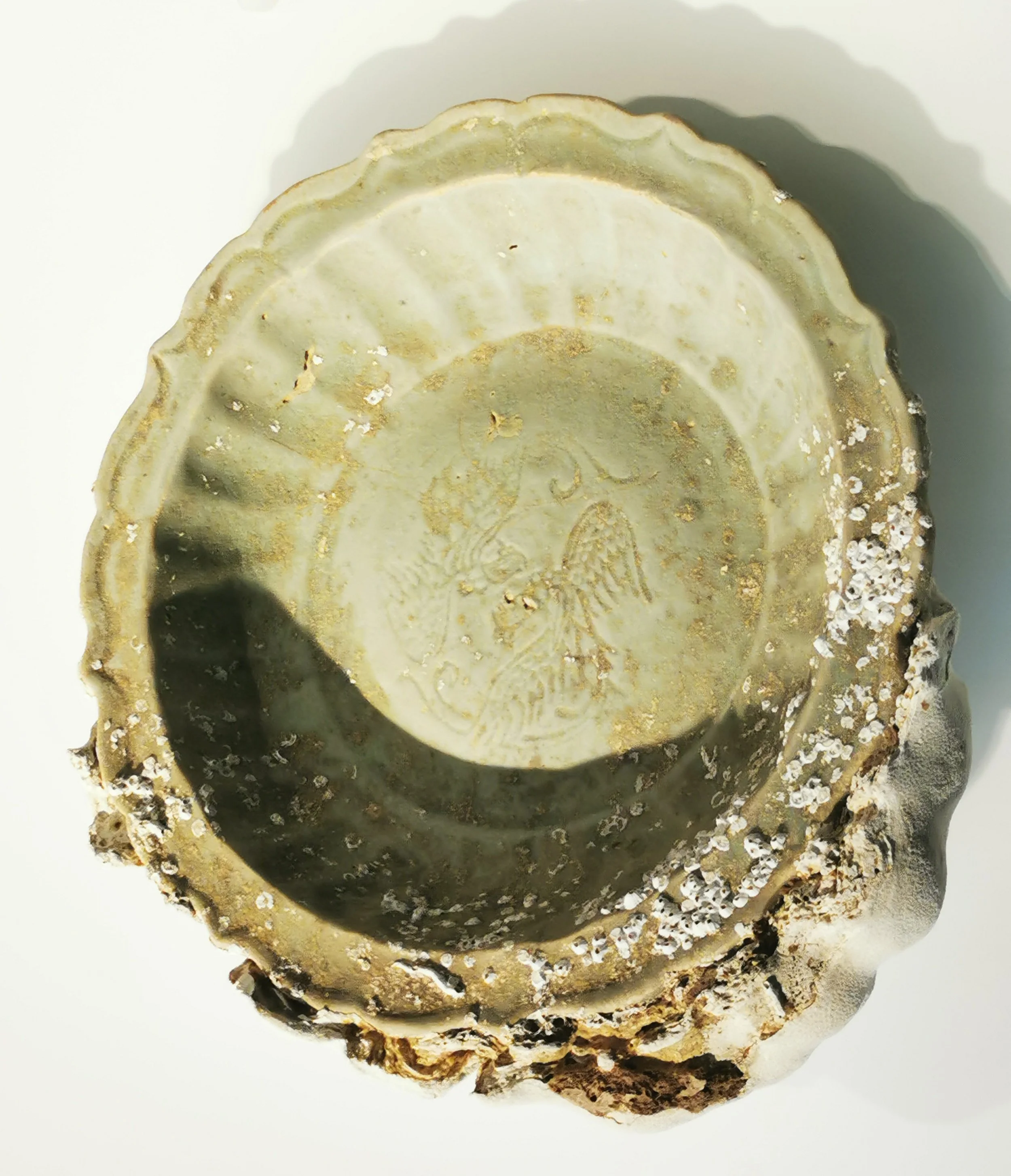
Fig. 42 Medium size Phoenix Caledon plate covered with thick coral grow from archaeologically recovered from Temasek Wreck Horsburgh Reef. Collection by Asian Civilisations Museum
(19)Temasek Wreck blue-and-white Mao(卯) Rabbit flora rim plate Fig. 43A,43B
Inner side of the outermost a round band of waves, a round section of passion flower scroll, centre of garden landscape with stones, willows, chrysanthemums, bamboo, grass, banana plant, in particular, there is a galloping rabbit and above with two written characters "Mao Rabbit"(卯兔), this plate is painted for the year of the rabbit of the zodiac, before this theme has never appeared in the Yuan blue and white world. Exquisite painting skills are not ordinary potters, and they may have been painted by literati painters. The outside with outer edge of the plate is also a round section of passion flower scroll. This Persian smalt (Sumaliqing) is bright in colour, and in addition to beaded droplets on the edges, it also presents many dark blue to dark condensed dots and small round patches in the strokes Fig. 44. The pattern of ink flow changes greatly. This ink rhyme is unique and particularly beautiful in terms of visual sense. With small and large bubbles in the egg white glaze also contain black bubbles, numerous corrosion pits, and a few matte sections of diameter 1-2 cm, which may be caused by seawater erosion or barnacle attachment spots. The glaze with old rainbow. Outer bottom of plate is particularly flat and not glazed, but coated with a layer of snow-white dense fine decorating slip, with many light flint red dots on it Fig. 44. The ring foot is stained with old rice husk ash, bronze patina and old textile fibres. It is 9 cm high, which is a little deeper than the average 6.5 cm.
Professor Jiang Jianxin, honorary director of the Jingdezhen Ceramic Archaeology Research Institute, has been excavating the archaeological excavation of the imperial kiln site for 40 years, and in his "On Export Porcelain in the Early Ming Dynasty", he explained that the Imperial kiln found many fragments of porcelain that were "Official Gift" or export wares to various countries in the Yuan and early Ming dynasties, and many of them have Islamic style or huge imperial wares. He explained that in the museums of Southeast Asia, the Middle East, along Indian Ocean, and coastal countries of Africa, there are porcelains from this time. At his lecture in Singapore last year, Professor Jiang gave a detailed view of the rabbit plate: the materials, glaze, painting work, and pottery craftsmanship of porcelain are the same as those unearthed in Jingdezhen and are not different from those unearthed in the same period, and it is a special cultural relic that has never been seen painted with zodiac signs and inscriptions in the same period.
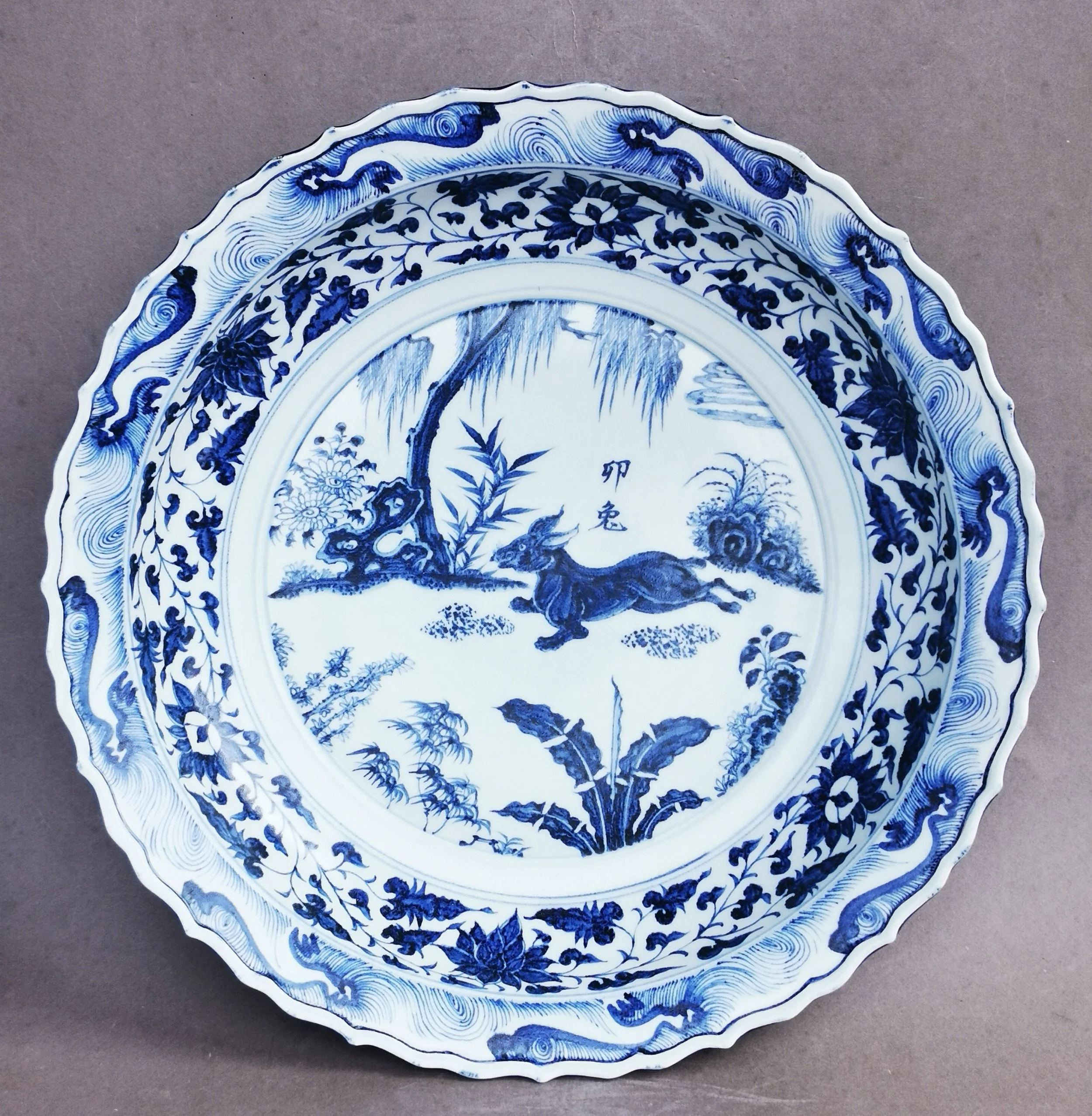
图43A Temasek Wreck at Pedra Branca, Singapore, 2000 by fisherman, Yuan blue and white "Mao Rabbit"(卯兔) plate, rim45.5 foot28.5 Ht9cm 4.2 kg, Collection by Lim Keow Wah
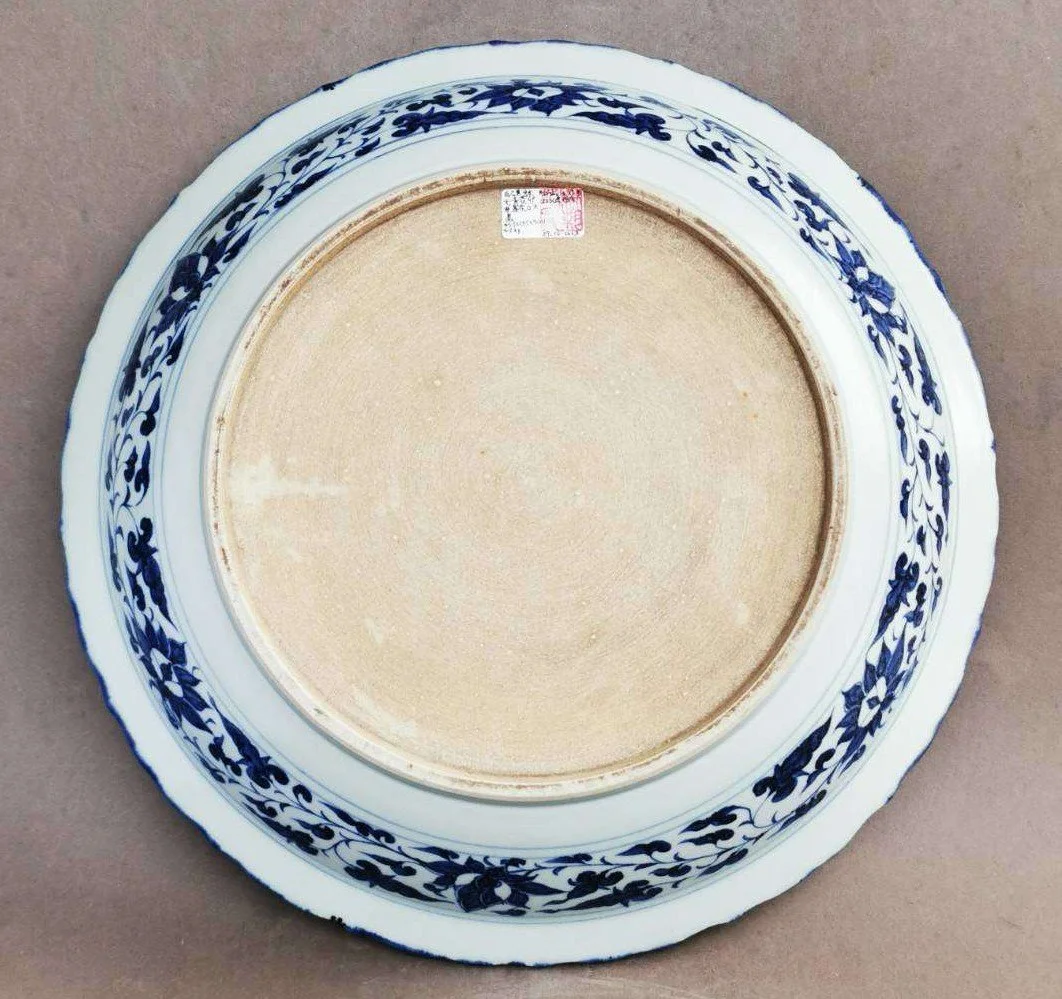
图 43B 新加坡白礁“淡马锡号” 2000 年渔夫出水元青花款“卯兔” 折沿菱花口大盘 口 45.5 足 28.5 高 9 公分 4.2kg 林朝华藏

Fig. 44 Temasek Wreck “卯兔” "Mao Rabbit" Yuan blue & white plate Persian smalt’s unique condensed dots and small round patches

Fig. 45 Temasek Wreck “卯兔" “Mao Rabbit" The bottom biscuit of the Yuan blue and white plate with dense and fine decorating slip having light flint red spots
(20) Temasek Wreck blue-and-white large dish with a folded side and lobed, floral rim, blue-ground white-pattern salvaged in 2000 Fig. 46
On the interior, the first outer band has wave patterns, and the second band has chrysanthemum and peony interlocking scrolls. Surrounding the central roundel are chrysanthemums. Inside six ruyi-shaped reserves are four-season flowers, and inside small ruyi-shaped reserves are various Buddhist symbols zabao (杂宝). At the very center of the roundel are four vajras (Buddhist thunderbolts). On the exterior of the rim is a band of interlocking passion flowers.
A distinctive feature is the two areas of blue-ground white pattern decoration. Where the Persian cobalt blue was applied, the glaze surface exhibits dense iron-brown speckles, dark blackish-blue crystalline spots, roughness, and pitting.
The outer base is coated with an exceptionally white, fine, and smooth slip of cosmetic clay.
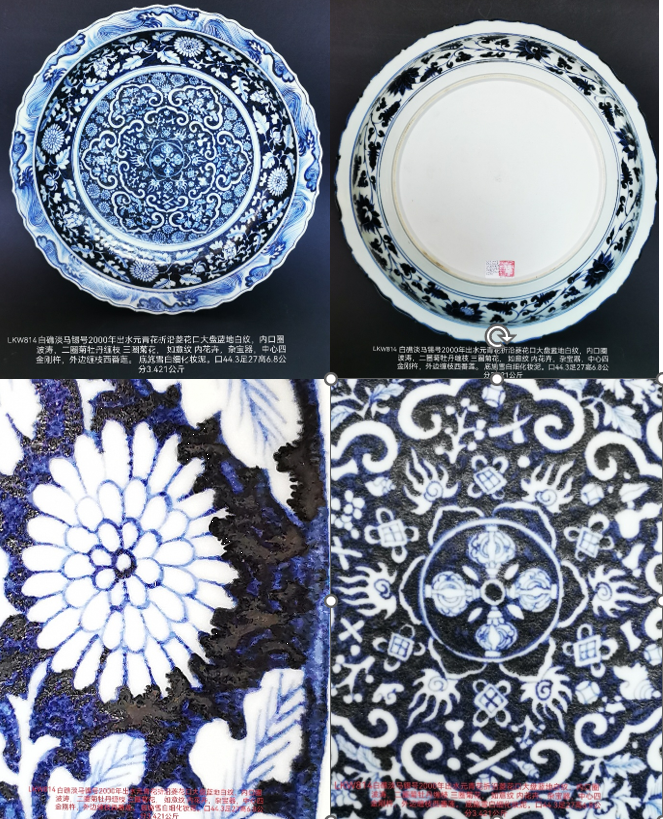
Fig. 46 Temasek Wreck blue and white large dish, floral rim, blue-ground white-pattern rim44.3 foot27 Ht6.8cm 3.42kg Collection by Lim Keow Wah
(21) Temasek Wreck blue-and-white large lobed-rim large dish story of Wang Zhaojun Fig. 47
Both the inner and outer bands of the dish feature wave patterns. The inner band has a blue-ground white carved design of peonies and lotus interlocking scrolls. In the circular reserved panel at the center, two figures dressed in Yuan dynasty attire are shown on horseback. One person carries a Haidongqing (海东青falcon) on his arm. Willow trees and plantains complete the scene.
The exquisite painting of the horses and figures is likely the work of a skilled, high-caliber painter. The Persian cobalt displays its characteristic lines condensed with small dots and tiny circular patches.
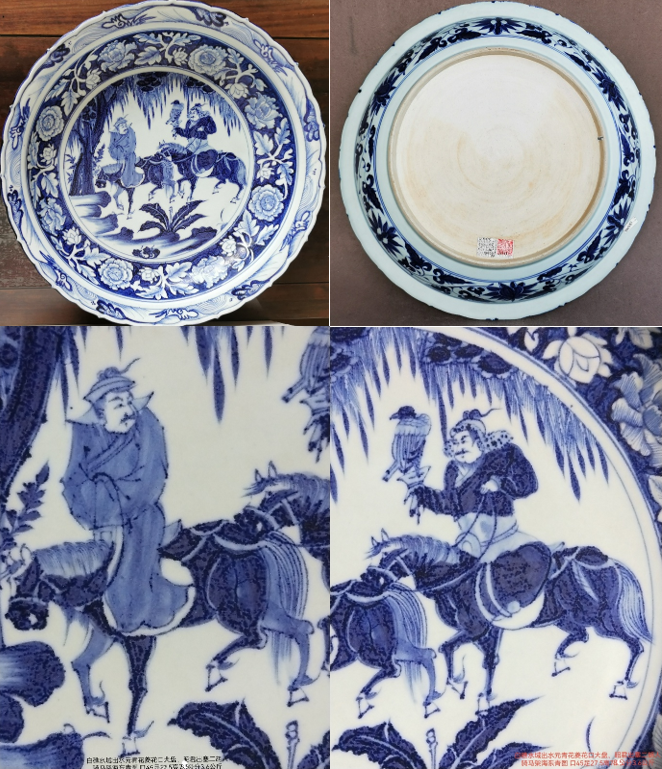
Fig. 47 Temasek Wreck blue and white lobed-rim large dish story of Wang Zhaojun (昭君出塞) rim45 foot27.5 Ht7.7cm 3.62kg Collection by Lim Keow Wah
(22) Yuan blue-and-white underglaze-copper red peacock meiping vase salvaged in 2000 from the Temasek wreck Fig. 48
On the shoulder: honeysuckle scroll and interlocking passion flowers (Western lotus). On the body: a pair of peacocks amidst interlocking peony scrolls, and upturned lotus petals. On the shoulder, there are Persian inscriptions in black dots. On the foot rim and the base, within red and blue square cartouches respectively, there is an inscription that related to :Sheikh Safi al-din Khānegāh and Shrine.
Fig. 49 This is an underglaze inscription applied at Jingdezhen before firing, which differs from the Persian inscriptions in black and red dots found on Yuan blue-and-white wares collected in the National Museum of Iran, where the dots were minutely punched onto the glaze and then colored after firing, in ancient Persia. The Persian cobalt exhibits pooling speckles, a strong rainbow-sheen iridescence numerous yellowed bubbles, and corrosion pits.
Note: There is another large Yuan blue-and-white dish Fig. 50 salvaged from the Temasek Wreck at White Reef that similarly bears underglaze inscriptions: two dedicatory phrases mentioning Abbas, together with a Mongolian 'Phags-pa script date mark reading 至正年制"Zhizheng Nianzhi" (1341-1370 CE). Therefore, the cargo from the Temasek wreck at White Reef can be dated to shortly after 1341 CE. Regarding the destination(s) of the ship's cargo, apart from Temasek (Singapore) as indicated by the archaeological Horsburgh Reef report, the author believes there was another intended destination, namely Persia (ancient Iran) of that period.
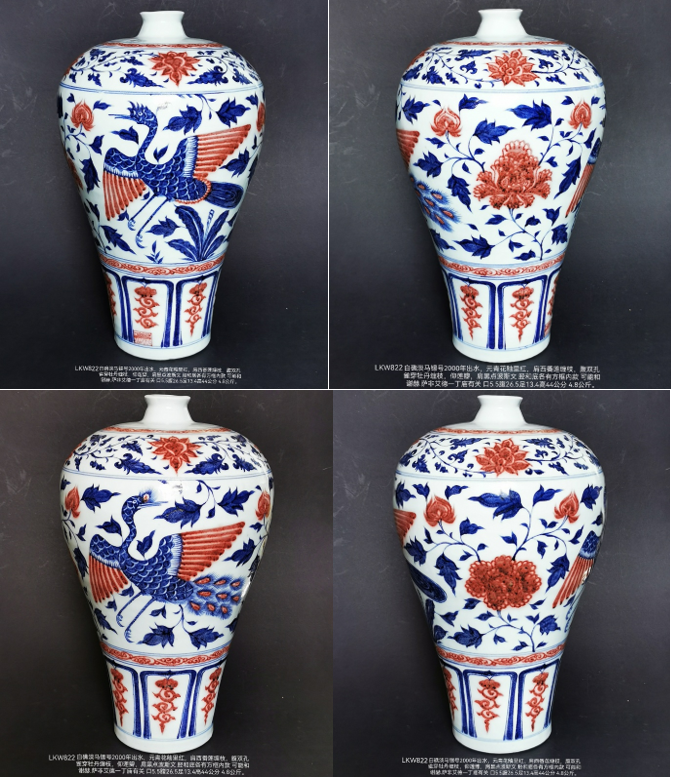
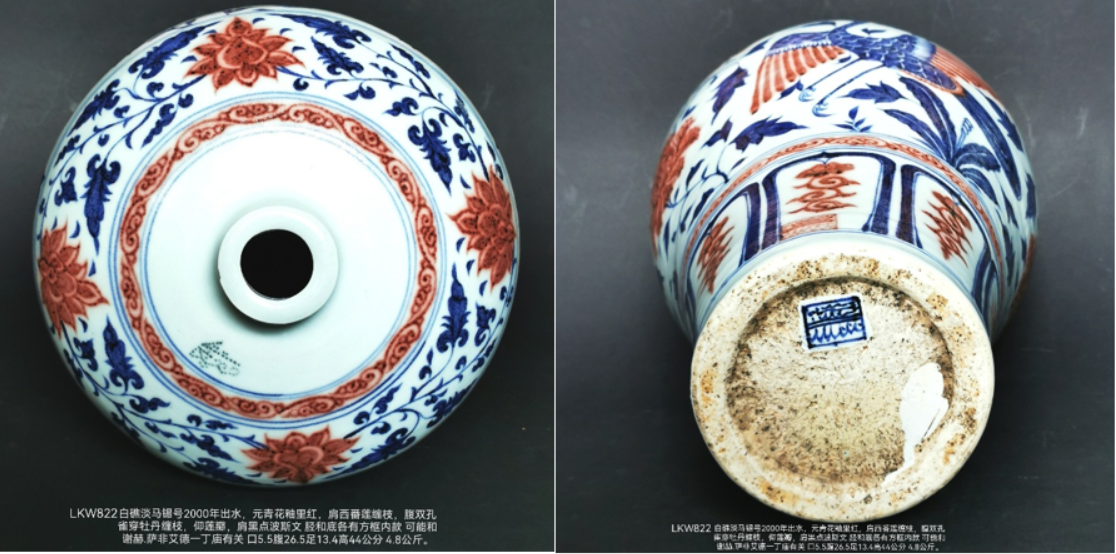
Fig. 48 Temasek Wreck underglaze-copper red peacock meiping vase mouth5.5 body 26.5 foot3.4 H44cm 4.8kg Collection by Lim Keow Wah
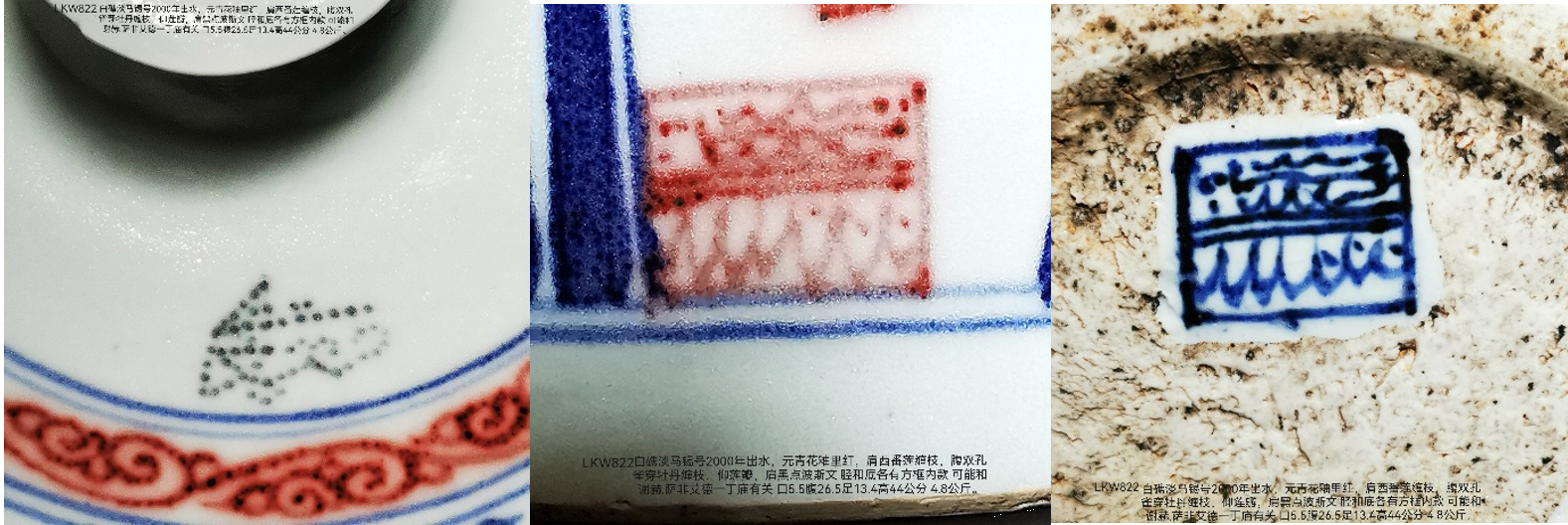
Fig 49 Temasek Wreck underglaze-copper red peacock meiping vase. Three different
colours underglaze inscription related to :”Sheikh Safi al-din Khānegāh and Shrine”
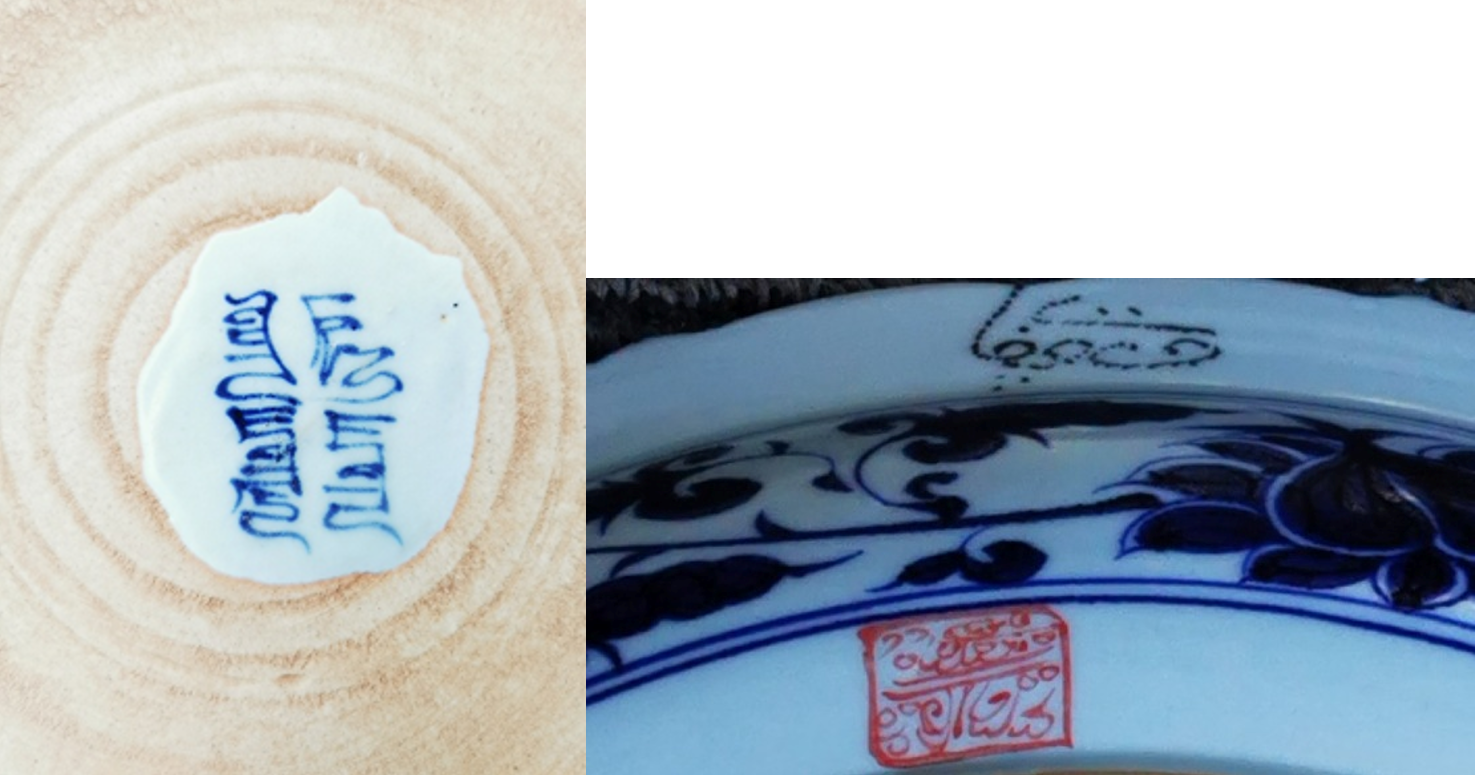
Fig. 50 From the Temasek Wreck large dragon plate bears underglaze inscriptions: phrases mentioning Sheikh Safi al-din Khānegāh and Shrine, and Mongolian 'Phags-pa script 巴思八文 “至正年制"Zhizheng Nianzhi (1341-1370CE)
(23) Temasek Wreck large Yuan blue-and-white octagonal jar with beast mask handles, Fig. 51.
The mouth rim is decorated with a brocade-ground pattern, the neck with floral and grass motifs, and the shoulder with chrysanthemums, peonies, and interlocking floral scrolls. The belly features bracket-shaped panels containing scenes of pine, bamboo, and plum (the Three Friends of Winter), as well as willows, mandarin ducks, and lotus. The foot is decorated with upright foliate lotus petals. Each of the two beast mask handles has two holes, through which bronze or iron rings could be threaded for ease of carrying. Spiral trimming marks on the base and three circular spots from flung glaze serve as the kiln's trademark or maker's mark. The deep blue color comes from imported Persian cobalt, characterized by numerous black crystalline speckles, a tin-flash iridescence, and swirling, sunken depressions in the glaze. The egg-white (luanbai) glaze is densely covered with seawater corrosion pittings Fig. 52.
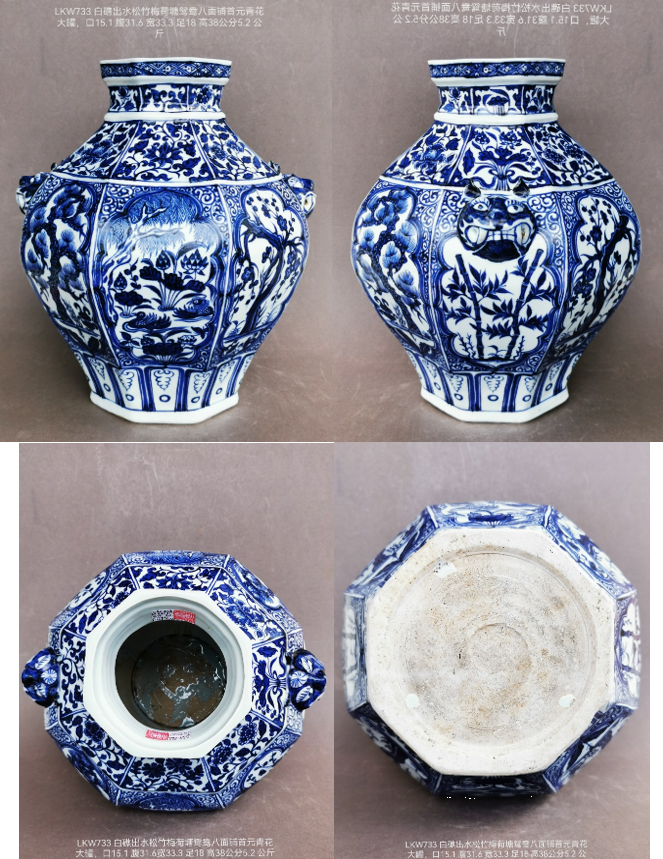
Fig. 51 Temasek Wreck large Yuan blue-and-white octagonal jar with beast mask handles mouth15.1 body31.6 width33.3 foot18 Ht38.0cm 5.2kg Collection by Lim Keow Wah
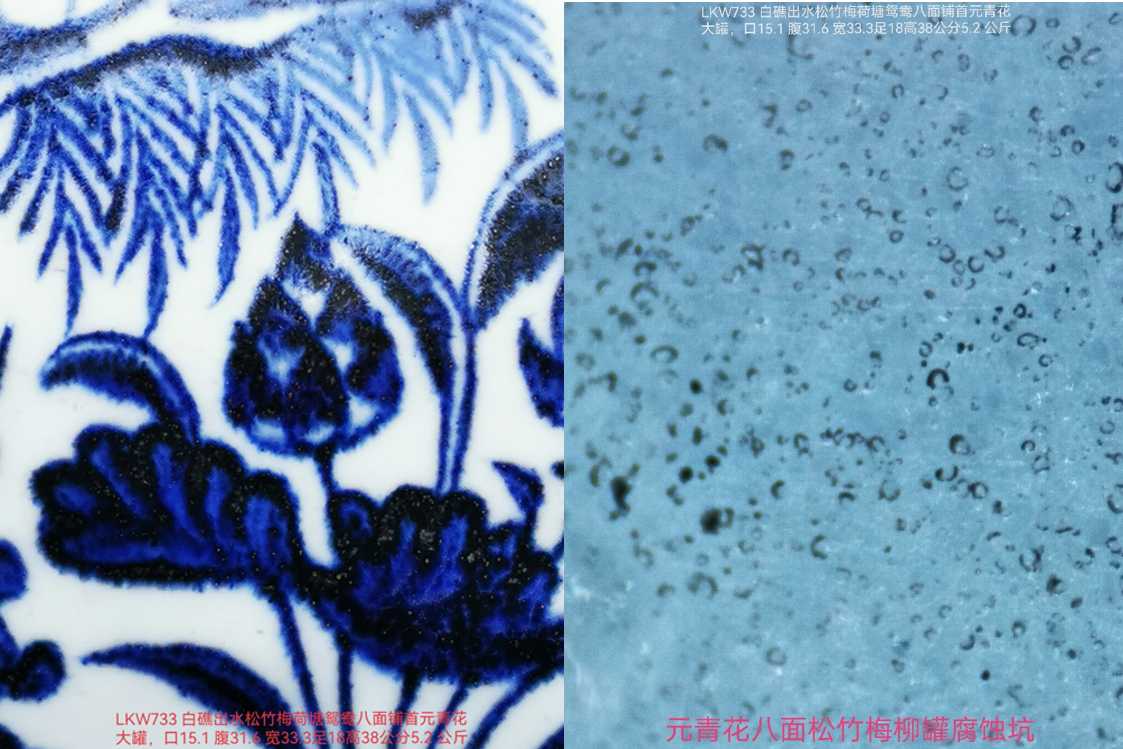
Fig. 52 Temasek Wreck large Yuan blue-and-white octagonal jar with beast mask handles. Left: imported Persian blue cobalt. Right: egg white glaze fully covered with seawater pitting.
(24) Temasek Yuan blue-and-white large jar with dragon Fig. 53
On the neck, rolling crest waves; on the shoulder, eight peony blossoms with entwining branches; on the belly, a mighty four-clawed dragon amidst tadpole-like motifs and fiery clouds; below the belly, a coin pattern; on the foot, upright lotus petals, thirteen in number. On the base, two small and one large glazed patches as kiln’s identity. The characteristic clustered tiny dots and small circular spots of Persian blue cobalt are present. The glaze surface is densely covered with characteristic seawater corrosion pits Fig. 54. On the foot bottom, multiple patches of old green copper rust patina are adhered, resulting from this ceramic piece having prolonged contact with copper objects after the shipwreck Fig. 55.
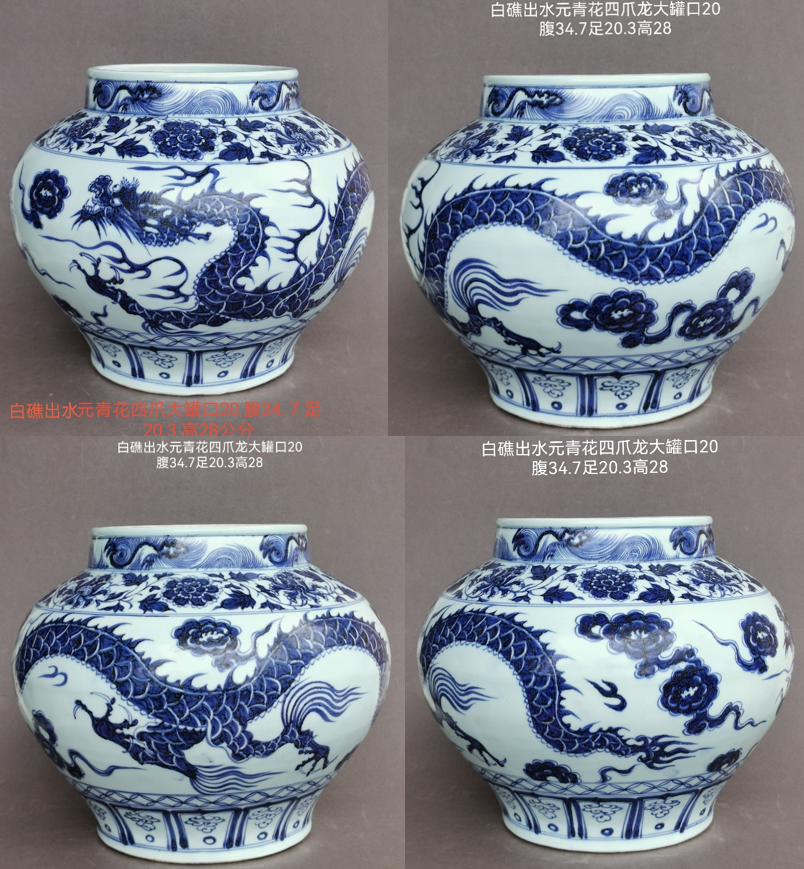
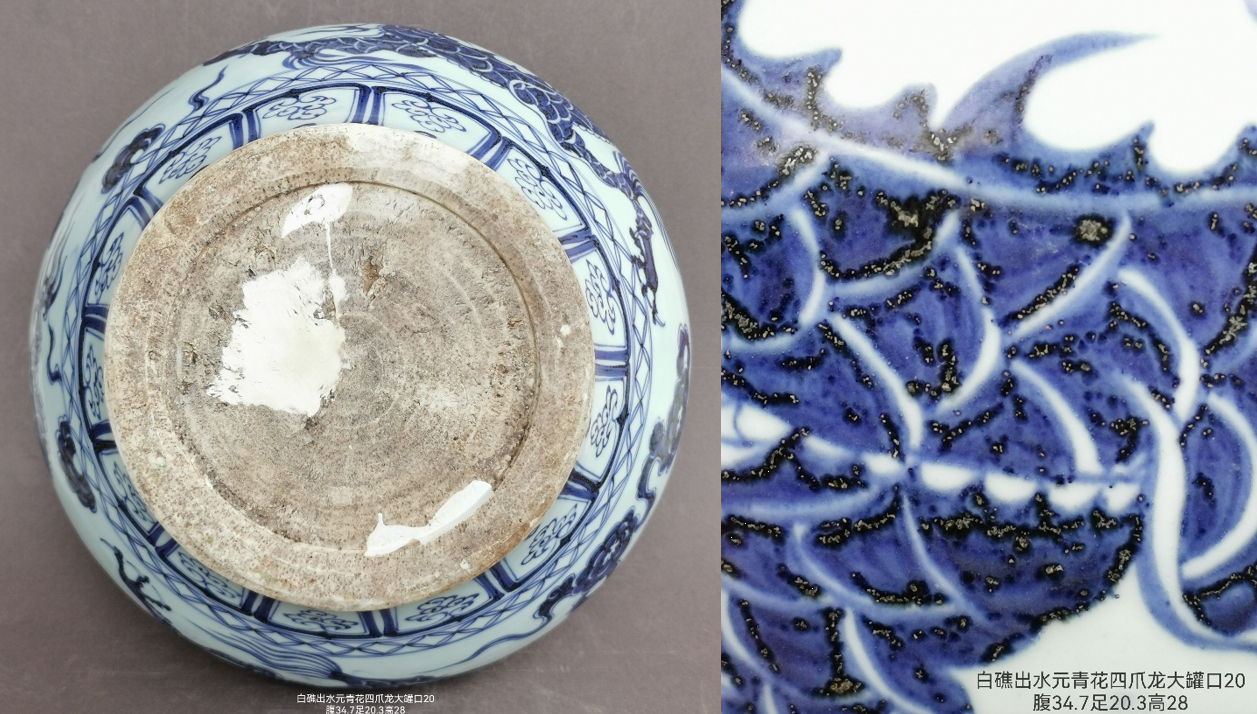
Fig. 53 Temasek Wreck Yuan blue-and-white large Jar with dragon. mouth20.0 foot20.3 body34.7 Ht.28.7cm 6.3kg. Collection by Lim Keow Wah
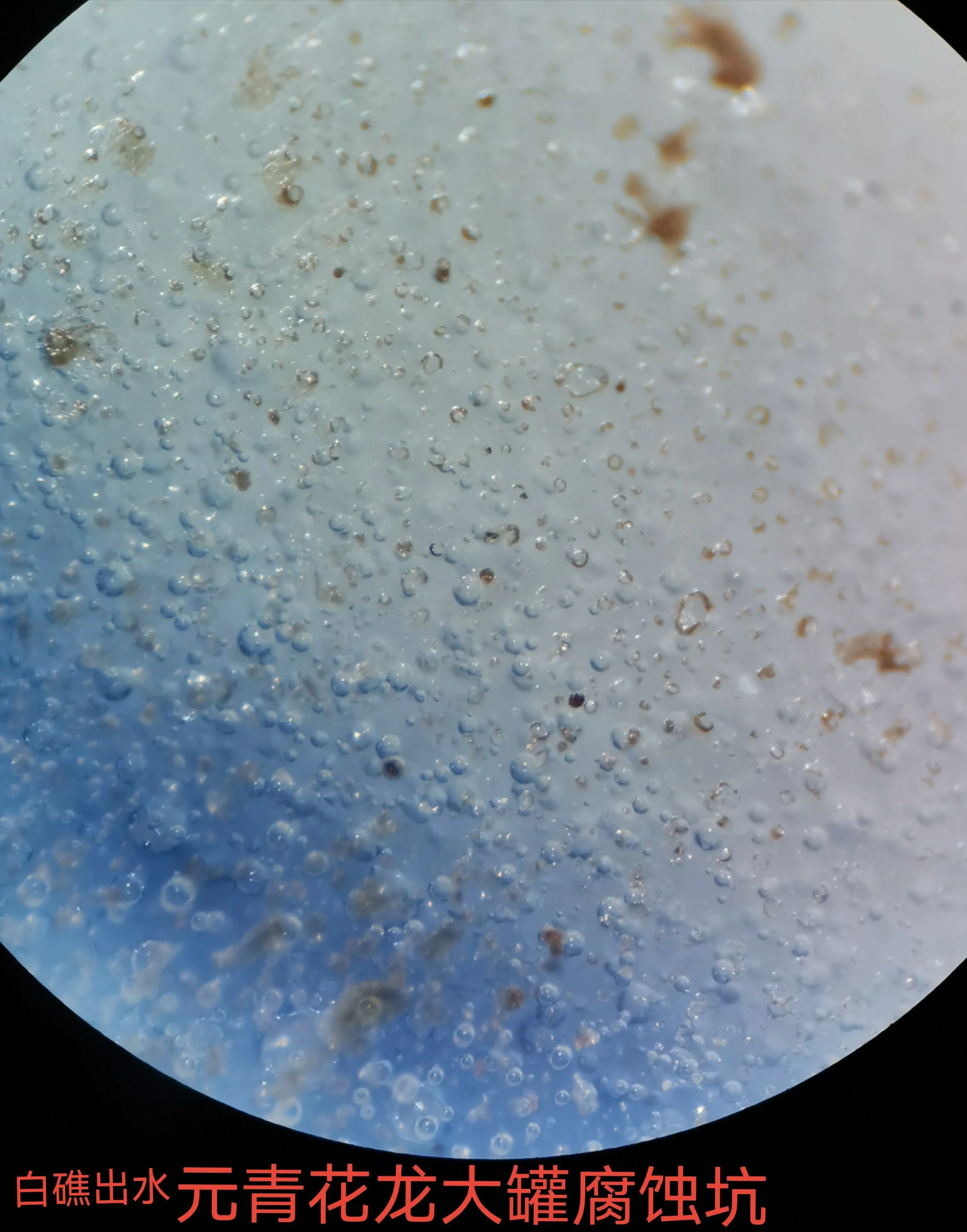
Fig. 54 Temasek Wreck Yuan blue-and-white large dragon Jar. seawater corrosion pitting
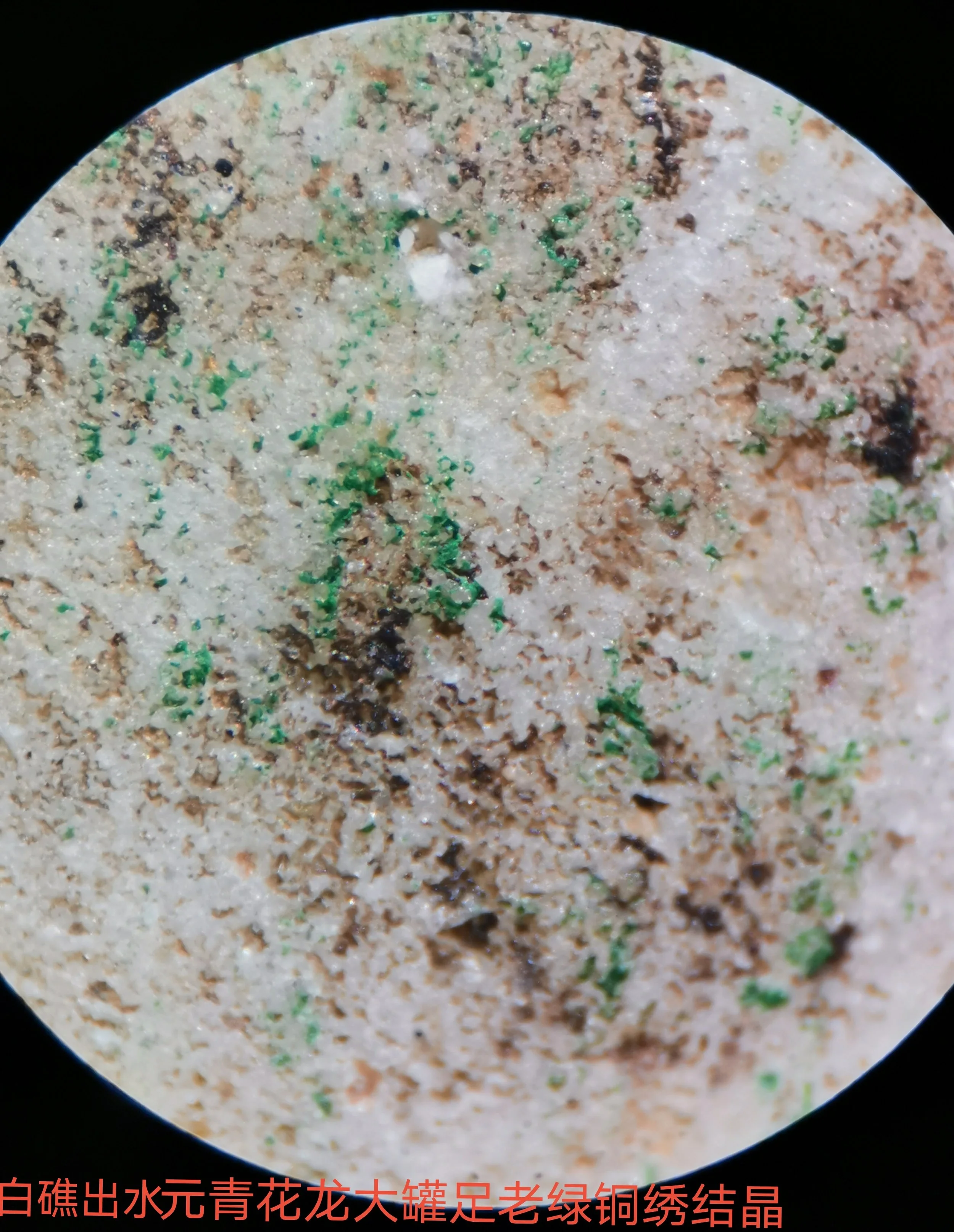
Fig. 55 Temasek Wreck Yuan blue-and-white large dragon jar. Ring foot attachment of copper patina
In addition to the world's rare and very special Yuan dynasty blue-and-white wares and fragments archaeologically recovered from the Horsburgh White Reef "Temasek Wreck", which are housed in the Asian Civilisations Museum, the author had, for many years prior to the publication of the Temasek Wreck archaeological findings, already collected a number of complete Yuan blue-and-white pieces recovered from the waters off Singapore, specifically from the Horsburgh White Reef Temasek Wreck acquired on the open market. These pieces are exceptional in quantity, form, workmanship, and quality. Through research on these recovered Yuan blue-and-white wares, as well as comparison with those recovered elsewhere or from other Southeast Asian shipwrecks, certain differences or unique characteristics, along with other features and information, have led to the following conclusions:
(1) Most pieces exhibit the Persian blue cobalt smalt, which generally presents a very vivid and brilliant emerald blue; very few display the greyish-blue or grey tones common to the Hongwu period. An example is Figure 21: a small round jarlet with two lugs and six vertical pearl beaded lines.
(2) Scenes of dark blue ground with white decoration appear relatively frequently — Fig. 29, 39, and 46.
(3) The exposed base is coated with a fine, snow-white protective slip — Fig. 29 and 46.
(4) Some pieces feature a single continuous decorative pattern without separation lines, covering the entire body — Fig. 33.
(5) Small fish-scale ripple patterns appear as background decoration — Fig. 33.
(6) The exposed base is coated with a thick, heavily crackled slip, and the glaze surface likewise exhibits larger fragments of crackle glaze — Fig.38.
(7) The entire surface is sprinkled with blue dots reminiscent of falling rain — Fig.36.
(8) No contemporaneous pieces bearing the zodiac rabbit and the cyclical character “卯兔” "Mao Tu" (Rabbit) are known on the market — Fig. 43A.
(9) Within the brushstrokes, clustered small dots and small circular patches ranging from deep blue to dusky black appear — Fig. 44 and 47.
(10) Pointed and curve edges double lotus petal motifs appear fairly frequently — Fig. 5 (Excavated from Empress Place) —Fig.11, 30, and 34 (foot section).
(11) Zhizheng 至正 reign marks appear — Fig. 40 and 50.
(12) Abbasid benedictory inscriptions in Persian appear painted on pieces from Chinese kiln sites — Fig. 49 and 50.
(13) The Yuan pear-shaped tea pot (pear-form) has a neck that is relatively slender or elongated compared to typical examples of the same type — Fig. 26.
(14) Due to the presence of the Abbasid benedictory inscription in Persian— Fig. 50, the author believes that besides the previously reported destination of Temasek (Singapore), a significant portion of the cargo on this shipwreck had another destination: ancient Persia.
(15) A number of finely executed applied animal motifs, such as chi dragons螭龙, appear, possibly products of the Hutian kiln湖田窑 — Fig. 16 to 20, Fig. 26, 28, and 30.
Summary The complete Yuan blue-and-white porcelain pieces from the Horsburgh White Reef "Temasek Wreck” in the author's collection introduced above represent only a portion. Apart from the Asian Civilisations Museum collection, this is currently the only published research report on Temasek Wreck porcelain that is not held in a museum but is part of a private collection (the author's personal collection). The author has introduced a total of 24 pieces of Yuan blue-and-white/underglaze copper red porcelain, ranging from small to medium to large. The primary reason for this is that Indonesian fishermen had already salvaged almost all of the intact Yuan blue-and-white pieces from the Horsburgh White Reef before the archaeological team arrived. Consequently, the number of complete/intact pieces on the open market far exceeds, and their quality surpasses, those held in the Asian Civilisations Museum. Some may find the quantity and quality of these 24 pieces inconceivable or impossible. Many people in China fail to appreciate the astonishing quantities — ranging from low to high quality — of maritime silk route porcelain exported from China to the West from the Tang, Song, Yuan, Ming, and Qing dynasties. For comparison, the following four Chinese shipwrecks from different periods, recovered from Southeast Asian waters, yielded the following numbers of porcelain pieces, rendering this collection relatively modest:
Tang Dynasty “Belitung“(Batu Hitam or Black Rock) Shipwreck: Recovered 67,000 pieces, primarily Changsha ware (50,000 pieces), from the waters off Belitung Island.
Yuan Dynasty Underwater Site (Shiyu No. 2), Xisha Islands: Despite severe looting, over 100 blue-and-white porcelain fragments were recovered.
Ming Dynasty "Wanli" Shipwreck: Recovered approximately 30,000 porcelain pieces off the coast of Terengganu.
"Tek Sing" Shipwreck (1822): Sank between Belitung and Bangka Islands of Indonesia, yielding 350,000 porcelain pieces.
This article is a supplement and summary to the official archaeological report, representing the author's research, documentation, and preservation of Singapore's history during China's Yuan dynasty and its precious cultural relics. It is offered in the hope of attracting valuable insights and encouraging fellow enthusiasts to jointly verify and discuss the identity of these pieces.
The recovery and research of the "Temasek Wreck" remains at a preliminary stage, as reported in 2022. Many fragments and much information from this shipwreck have yet to be fully processed. We look forward to the subsequent, more comprehensive and in-depth research to be conducted by the National Heritage Board of Singapore.
——————————————————————————————————————————————————————————————————————————————————
(4) John N Misic on the "Forbidden Hill" of Singapore, Excavation of the Fort Canning 1985
(5) The Temasek Centre for Historical Studies, part of the Yusof Isa Institute of Southeast Asian Studies, published a preliminary report on the excavation of the 14th-century Temasek shipwreck, which summarizes that a Chinese ship from the Yuan dynasty produced a total of 4.4 tonnes or 106 pieces of fragments of Yuan blue and white and Longquan porcelain, some of which had been plundered before. Departed from southern China and the destination may be Temasek.
The Temasek Wreck (Mid-14th Century), Singapore, Preliminary Report by Michael Flecker
Captain Lim Keow Wah
Paper Published on 5th May 2026
He has served ExxonMobil for many years, serving as a Malacca Strait VLCC Malacca Strait Advisor, port captain, and chartering advisor. Now retired
President of the Singapore Penjing and Stone Appreciation Society.
Deputy Secretary of the International Zheng He Society (Singapore).
Deputy Director of Zisha Pot Professional Committee (China).
He has undertaken large-scale antique auctions.
Antique collections, cultural relics restoration,
Antique collection and Sea Silk Road research papers on web: //www.limkw.com
Email/ 电邮 limkeowwah@gmail.com
Mobile 手机 Whatsapp +65 8809 1161
Wechat微讯 lkwah1953
Singapore 新加坡